
Hi-tech manufacturing technology,
contemporary architecture
Electronics component manufacturing plant and office development
Client: Swiss-owned multinational company
Size: 12 400 + 9000 m2
Location: Budapest
Architect: Attila Tóth
Interior designer: Dávid Cserháti
Services: BIM services, Concept design, General design, Interior design, Scan to BIM
Sectors: Industrial building, Office
The project
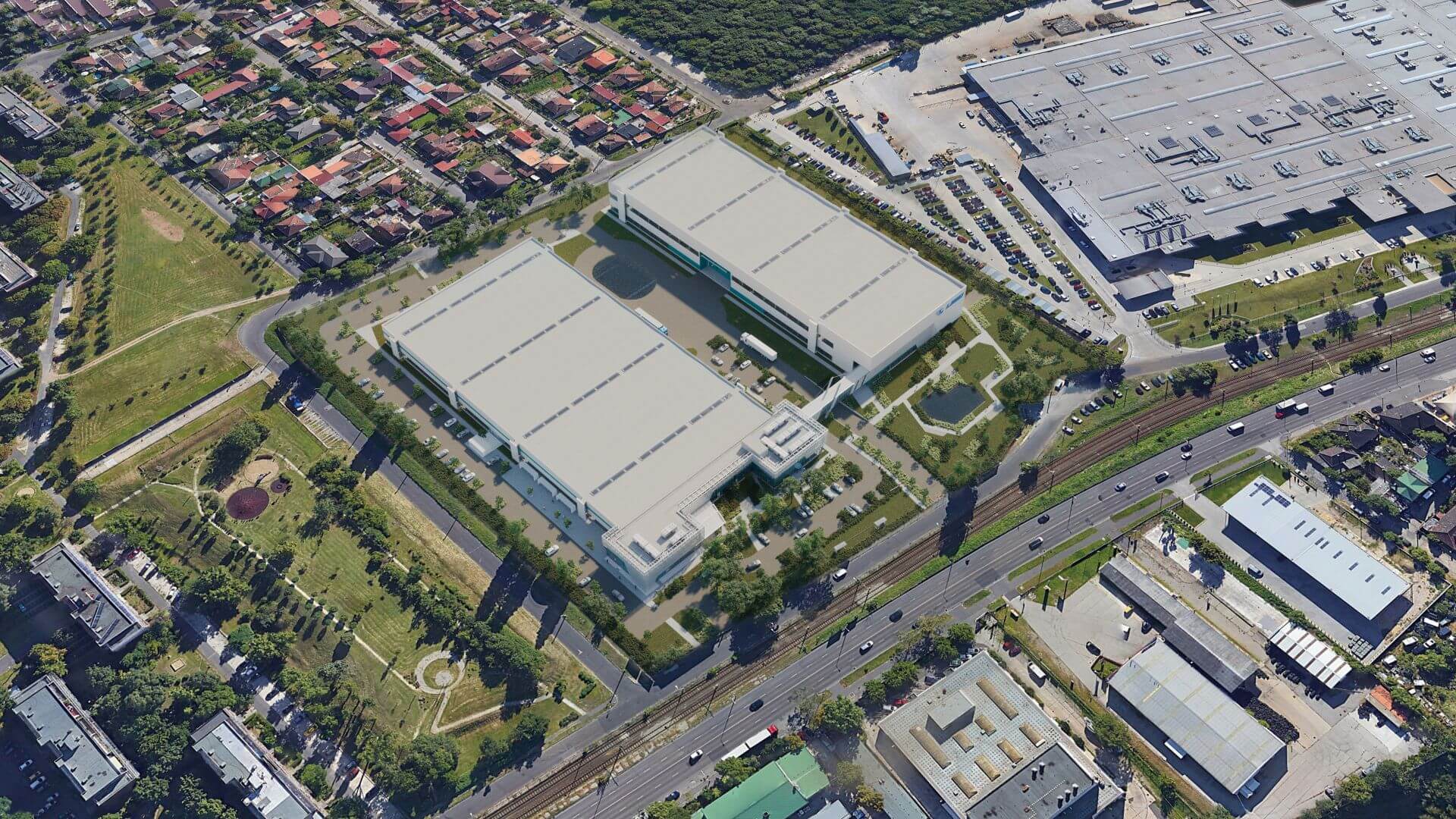
A Swiss-owned multinational electronics group planned to expand its manufacturing capacity in Hungary in two phases with a newly built electronics component manufacturing plant at its Budapest site, for which it was looking for a general designer.
- Phase: 10,000 m2, single-story industrial building and 2,400 m2 net two-story office building (2026)
- Phase: 9,000 m2 two-story factory building (2040)
In the medium term, while the second phase is not yet underway, part of the investment will involve the creation of a paid parking area on the available land.
BuildEXT won the tender for the general design tasks, allowing the collaboration to begin in March 2024.
The Swiss-based company manufactures electronic components, primarily industrial connectors and cables. It has manufacturing facilities in many countries around the world and serves approximately 100,000 customers in 80 countries with 75,000 different products.
It has been operating in Hungary since 1990, employing approximately 120 people in an integrated infrastructure ranging from machining to cable assembly and sales, manufacturing push-pull connectors for customers such as Siemens, Audi Hungária, and NBH.
Initial condition
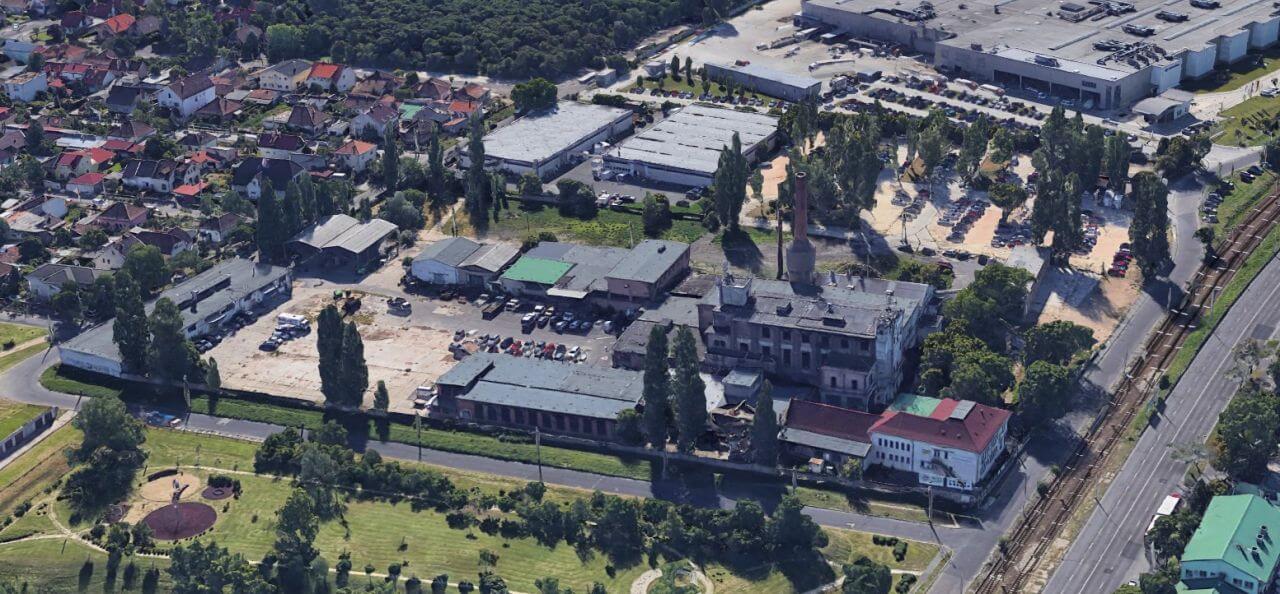
The planned location for the company’s new site is the former Pesterzsébet Paper Mill property. The technical condition of the existing buildings in the rust belt area has deteriorated overall and cannot be renovated economically. The developer therefore decided to demolish the buildings and grind up the large amount of reinforced concrete on site, reusing it during construction and, in part, as paving for the rental parking area.
Scan to BIM
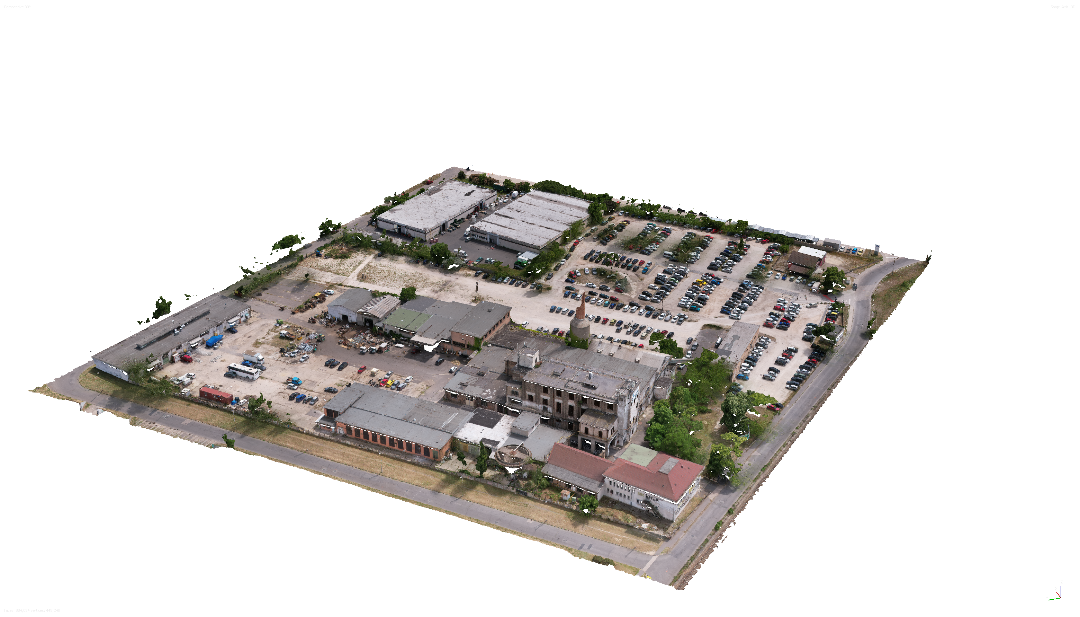
In order to ensure a smooth demolition process and precise planning, we began the project with a drone-mounted laser survey. The purpose of recording the initial condition was also to plan the entire investment in such a way as to save as many trees as possible.
As can be seen in the visual plans below, the staff canteen, the terrace opening from it, and most of the office areas will also overlook the area with mature trees.
Attractive expectations
We had to meet a number of the client’s requirements for the building, which mainly focused on exceptionally high employee comfort, the integration of hi-tech manufacturing technology, environmental considerations, and economical operation.
Of course, aesthetic requirements also came into play: we had to design the connection between the halls of the first and second phases in such a way that it would appear natural from an architectural point of view, but the first phase alone would also have to look good. This was accompanied by the need for high-quality contemporary architectural design and a cost-effective yet highly attractive exterior and interior appearance.
There was also a requirement that the first phase should take into account the goods traffic, utility connections, etc. of the second phase, and that the second phase should not significantly interfere with the production activities of the plant built in the first phase.
Phase 1 – Production hall and connected office tower buildings
The operational areas of the first phase had to be prepared primarily for machining production technology and related activities. We sought to create the most natural and well-designed physical connection possible between the single-story production block and the two-story office building, resulting in the following three-part division.
1. Left tower
The tower on the left primarily serves those working in production.
They can approach the revolving door employee entrance from the large parking lot via a landscaped path equipped with bicycle storage, from where stairs lead up to the men’s and women’s changing rooms and the washrooms. There is also a cleaning equipment storage room and a mechanical room on this floor.
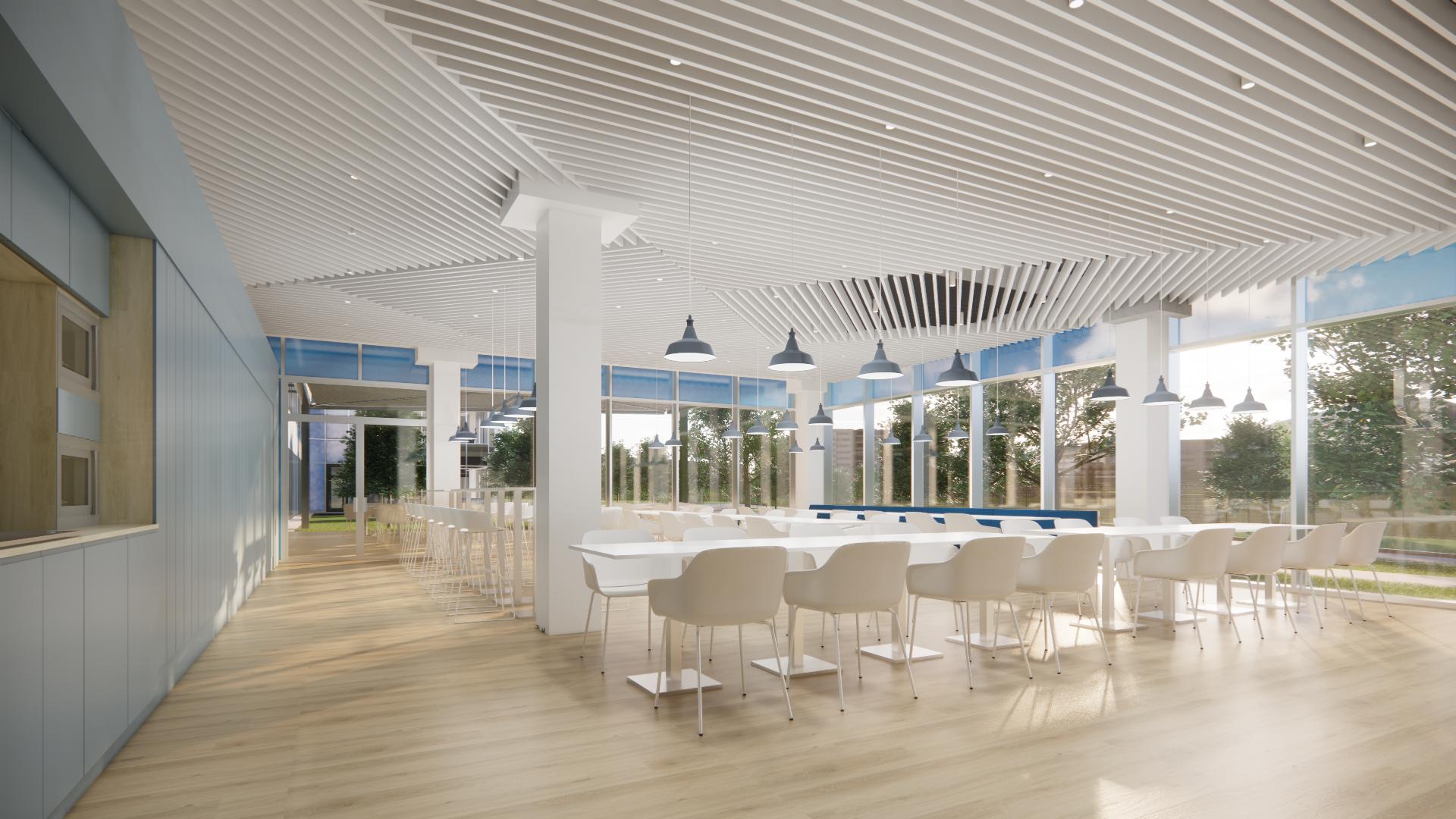
We placed a canteen with a heating kitchen on the ground floor, űused by both office and factory workers. The facade of the office building is covered with aluminum curtain walls over its entire height, in front of which there is an expanded aluminum shading structure, which also gives the facade its characteristic architectural appearance.
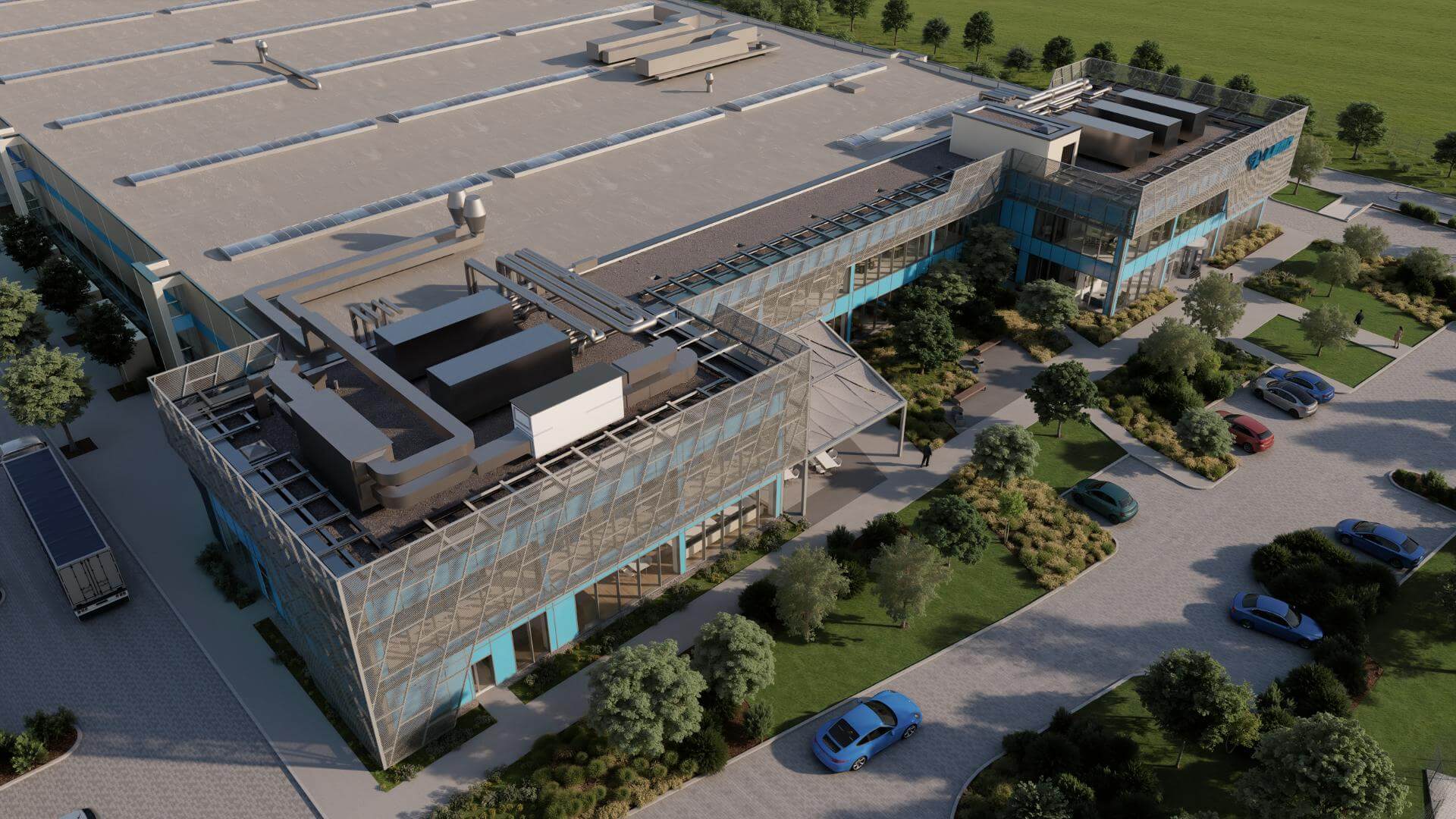 The left tower was primarily designed for factory workers.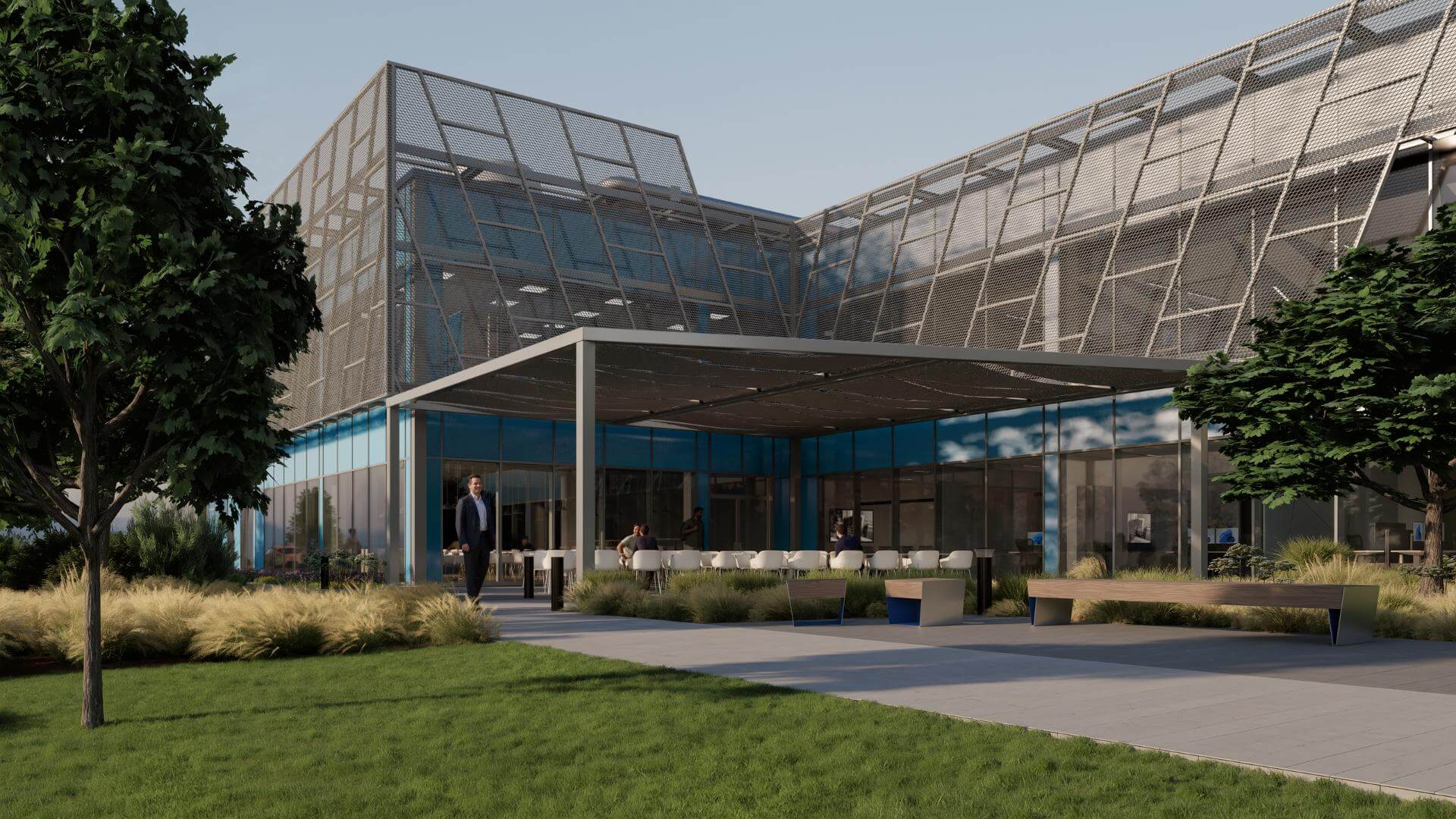
Connecting bridge
The section connecting the two towers houses office functions related to production.
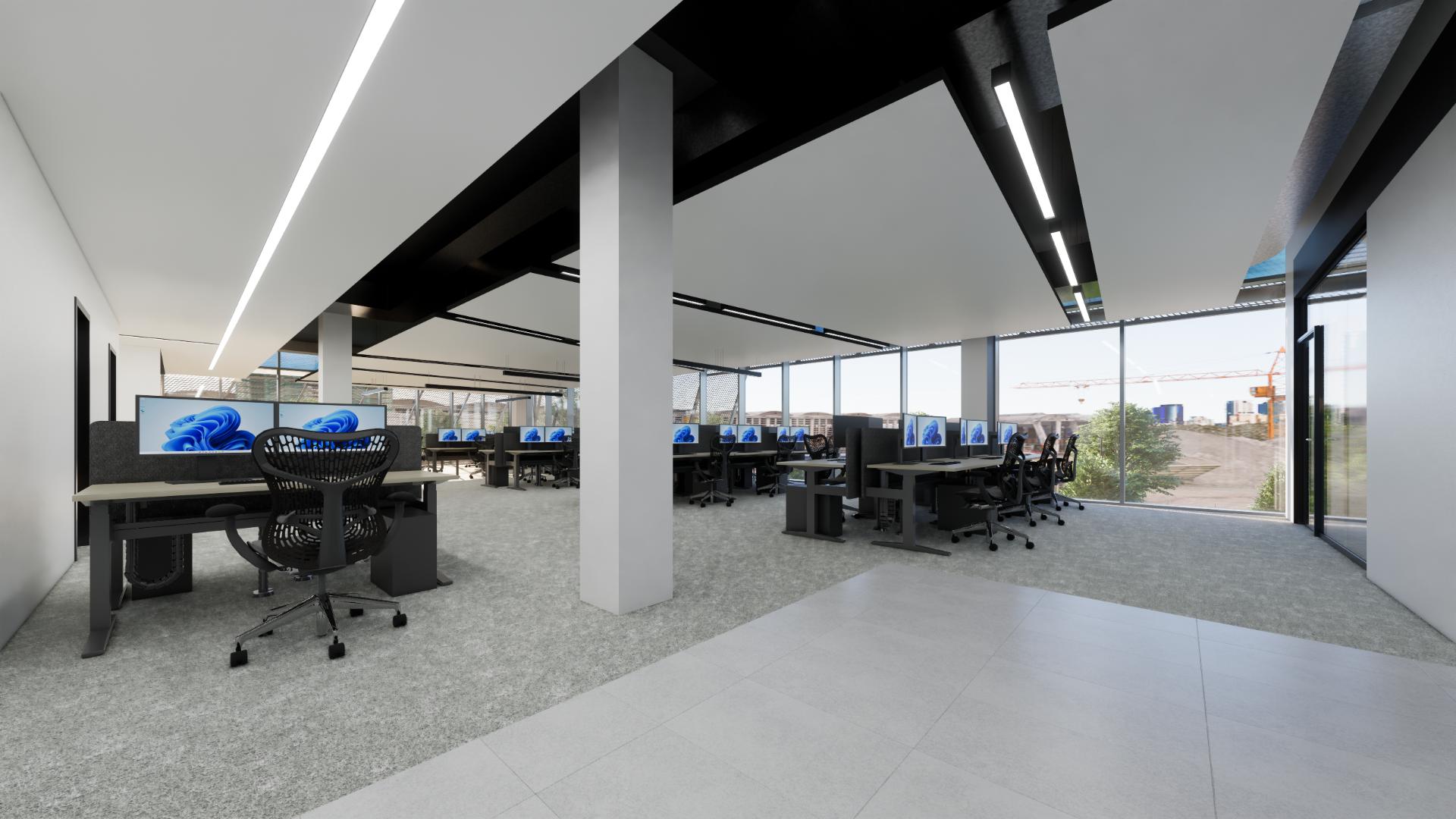
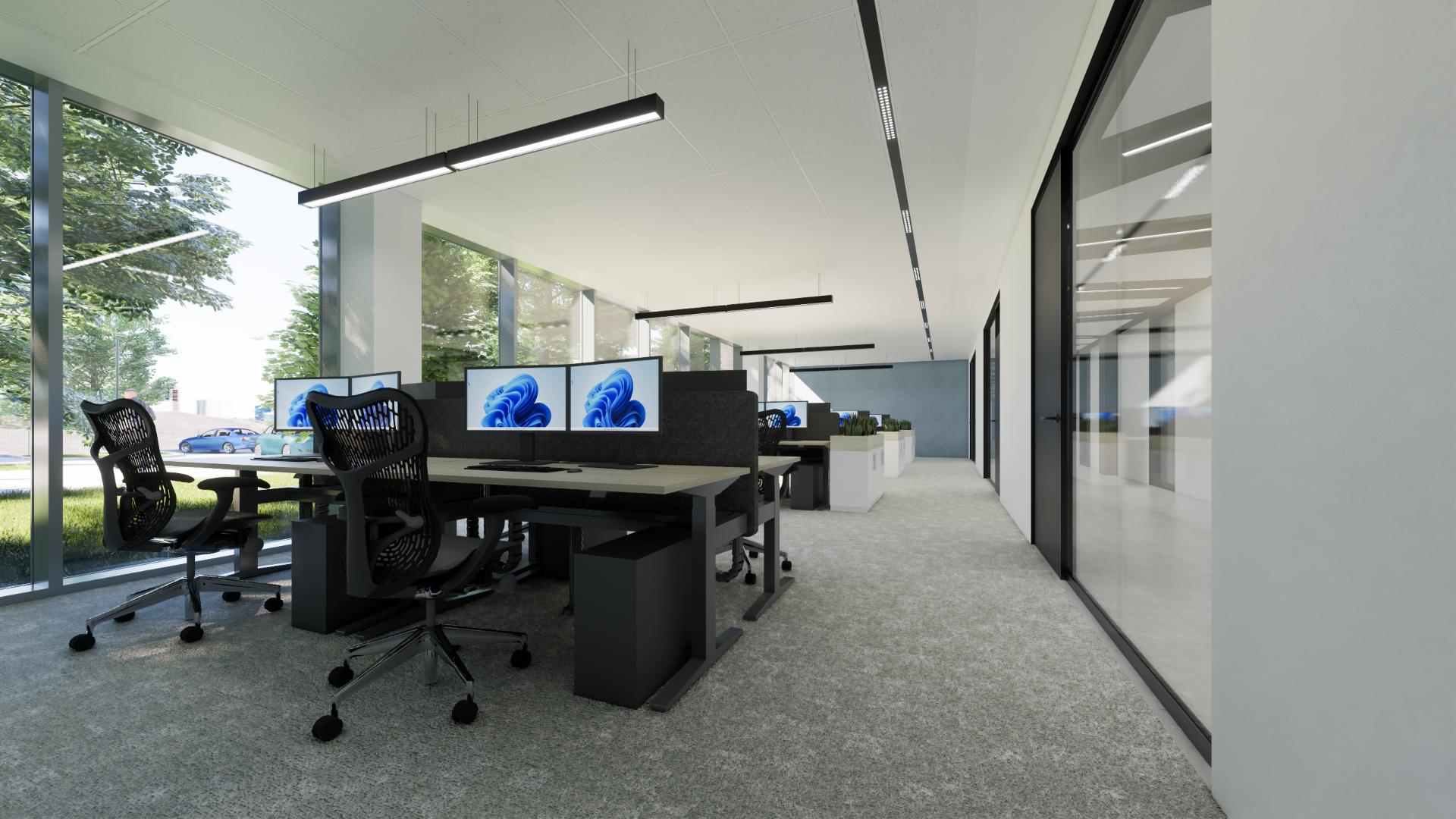
The floor accessible from both staircases houses the offices for inventory preparation, logistics, and procurement, while the ground floor houses the offices related to production management. This area also houses the HR department, ensuring proximity for both employees and interviewees.
The two large open-plan offices on the upper floor were separated by private meeting rooms, while also creating a direct connection to the finance and controlling departments located in the tower on the right.
Right tower
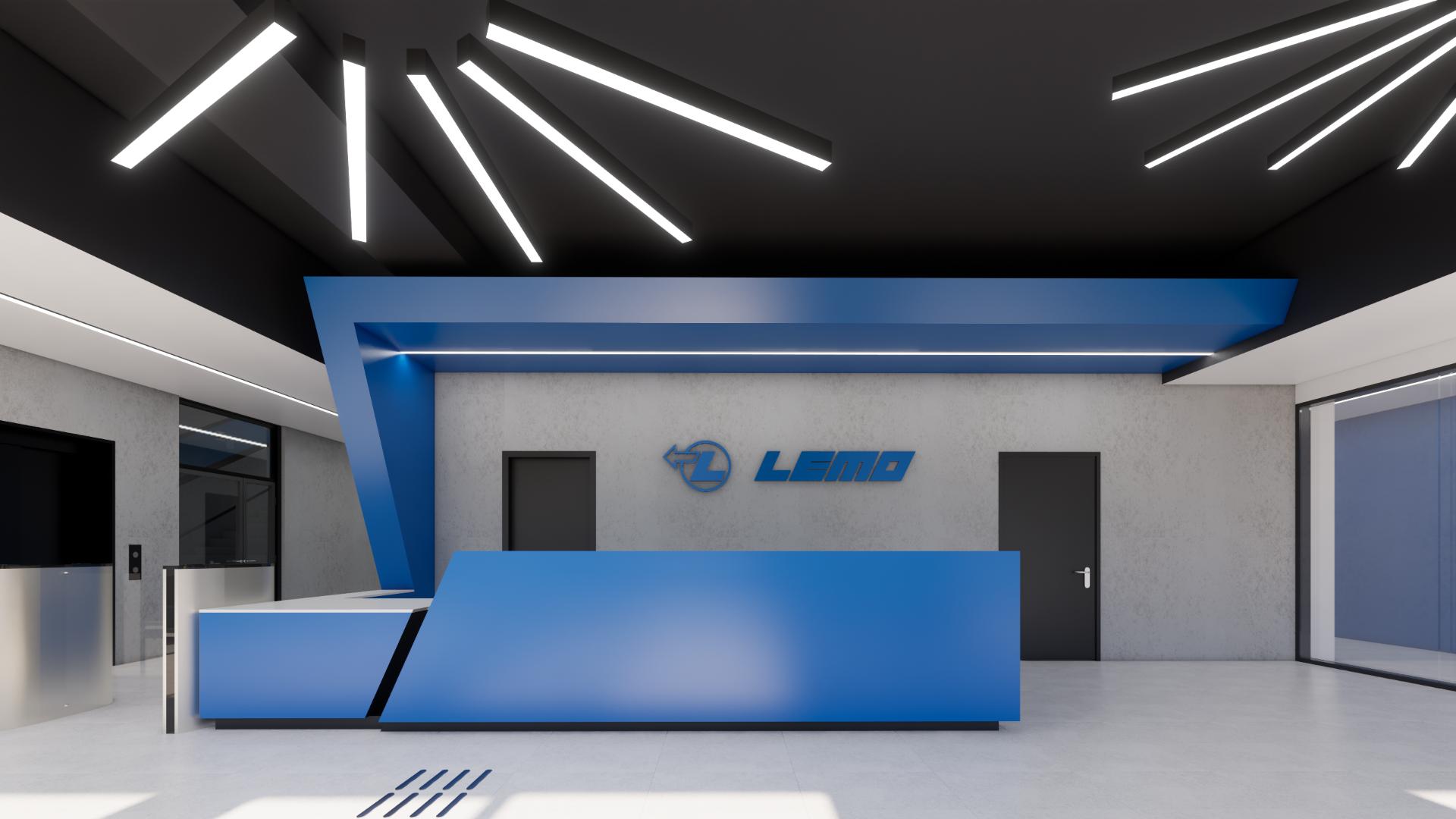
The right tower is the most representative part of the building thanks to its spectacular main entrance.
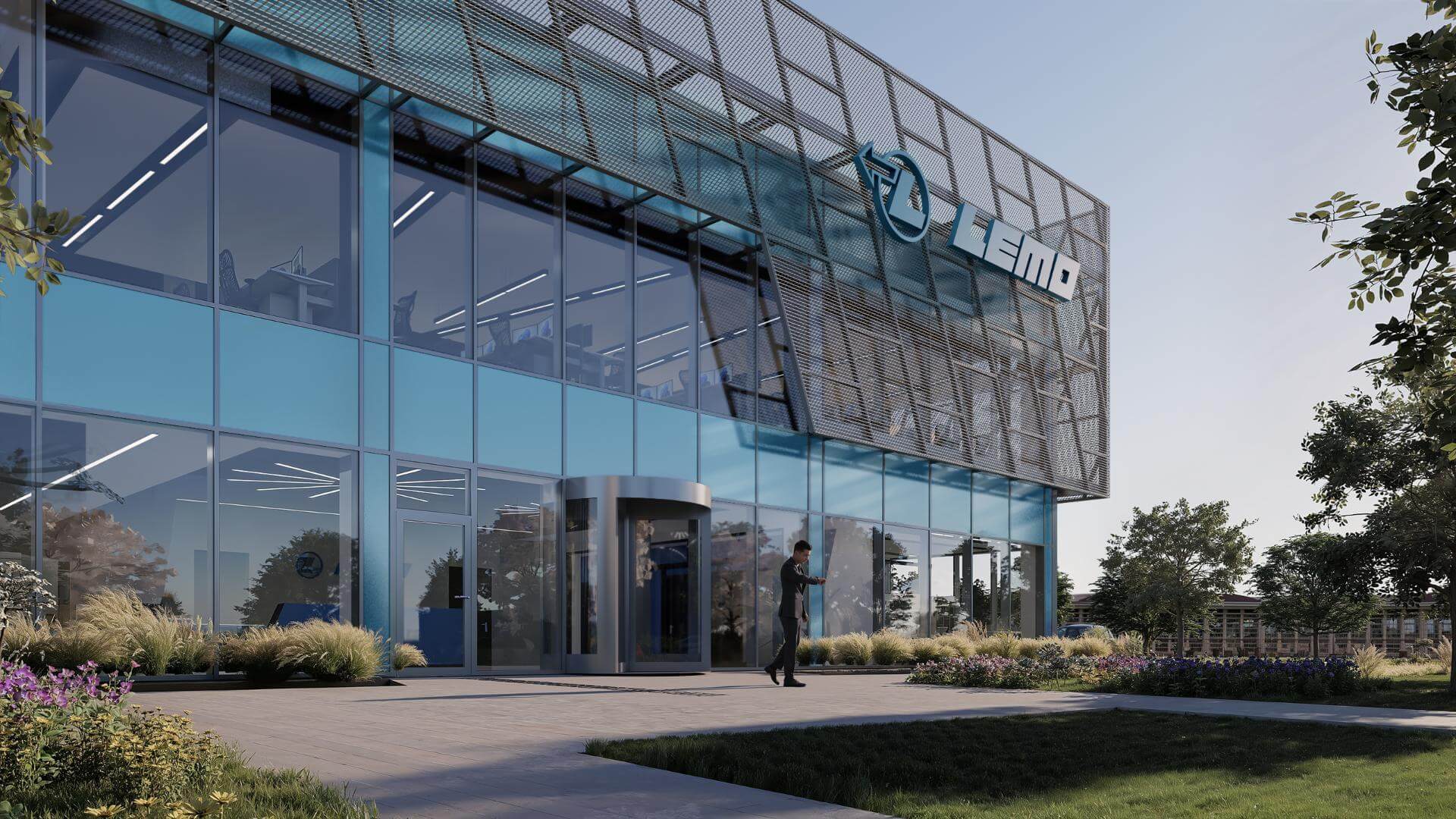
On the ground floor, next to the reception and showroom, we have placed meeting rooms that also function as interview rooms. This area is used for receiving guests, recreation, and product presentations. It can accommodate more than 150 people, making it suitable for celebrations, training sessions, and company-level announcements.
The upper floor reception area leads to the executive offices and the boardroom. From this level, you can access the upper part of the connecting bridge section leading to the left tower, as well as the bridge leading to the block to be built in phase 2. The server room, a bathroom, two smaller chat rooms, and a kitchenette are also located on this floor.
Logistics functions
The warehouse is organized towards the planned second phase logistics yard, opening onto the south facade in phase 1 and the north facade in phase 2. The storage of finished products, packaging, preparation for transport, and the delivery gate are on the left, while the raw material storage and stockpiling are on the right. The raw materials warehouse can store bulk materials, palletized goods, and smaller parts thanks to lifting baskets. A scissor lift table on site helps to load side-loading trucks with a pallet jack.

Heating center, energy supply
We placed the building’s heating center in the middle of the production area, making sure that the noise from the compressor room would not disturb the surrounding residents, while at the same time ensuring that heat recovery would be possible due to the proximity of the heating center.
The building’s transformer room and main distribution cabinet are also located at the center of the production area.
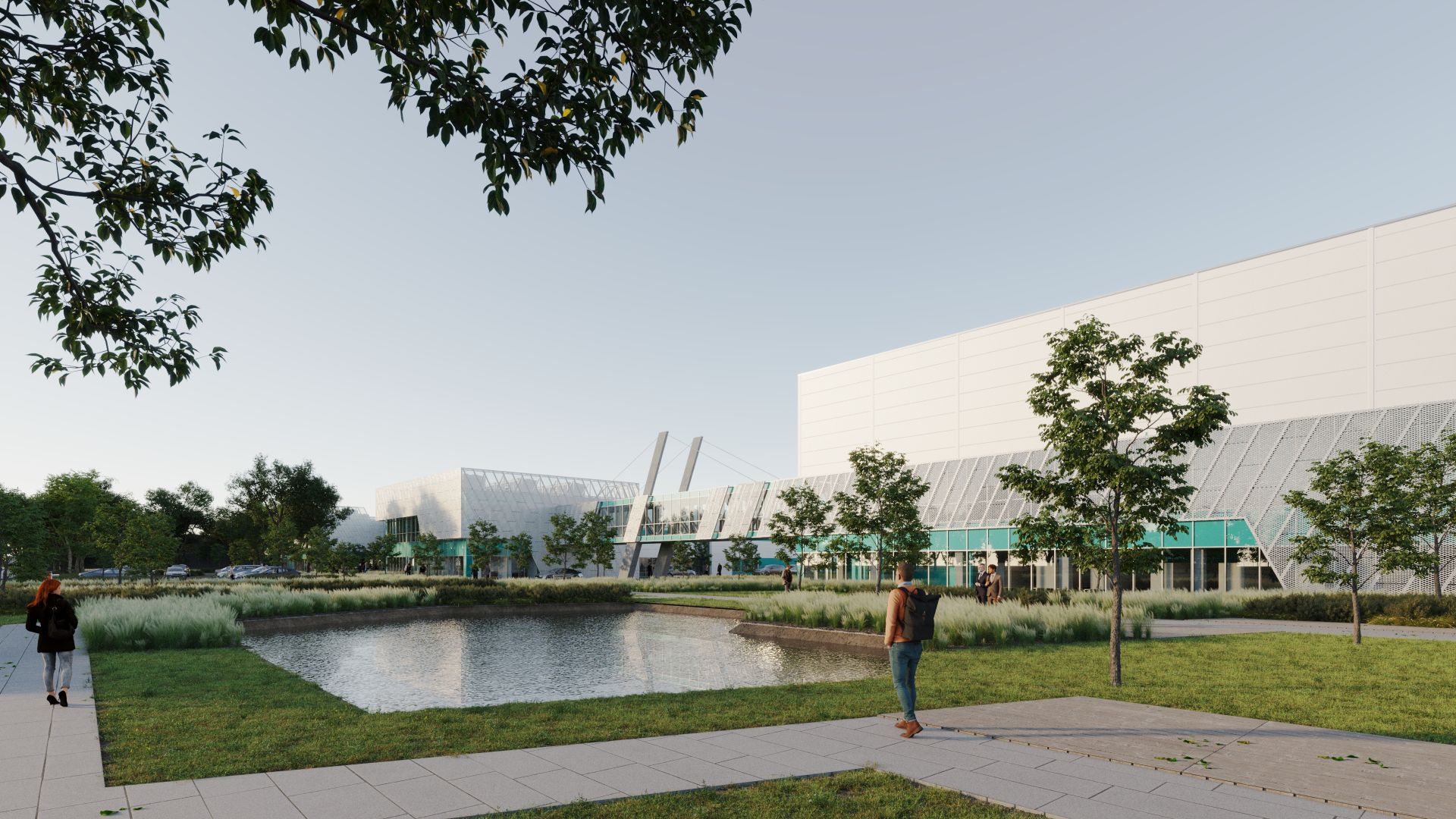
Both buildings are equipped with leak and rainwater retention systems. The drainage reservoir in the front and rear gardens of the facility functions as a decorative pond with conscious use of plants, and we have designed a park around it to serve as a relaxation area for employees.
Sustainability in the focus of building services engineering
During the design of the building services systems, we paid special attention to energy efficiency and the utilization of waste heat generated during production, which was also strongly supported by the client during the design process. The waste heat is used to raise the energy level of the liquid with a water-water heat pump, which supplies the entire heating demand of the office building and the air conditioning systems of the offices and the hall.
The waste heat from the compressor housing, which has a capacity of several hundred kilowatts, is used to heat the entire building, power ventilation systems, and supply hot water for domestic use. Thanks to the above, depending on the load (production ramp-up), the building’s heating requirements can be met entirely by utilizing waste heat.
Phase 2 – two-story factory building,
in the same unit as the first plant
Phase 2
Connecting bridge
The two buildings will be connected by a suspension bridge, ensuring that office and management functions can be integrated into a single unit, eliminating the need for duplication of organizational units in each building. The bridge elements reflect the shape of the company’s logo.
Office
The office building, which is being constructed in the second phase, will also include management and changing room facilities. The two-story building’s employee capacity necessitates the creation of a new changing room block, which will be located on the ground floor, near the employee parking lot.
The ground floor of the building houses a reception area, showroom, kitchen, and meeting rooms. Similar to the right tower, this area can be used for receiving guests, relaxation, and product presentations, and, based on its capacity, it can also serve as a venue for celebrations, training sessions, and announcements.
Representative appearance
During the design process, we paid special attention to ensuring that the Helsinki Road façade and the company’s reception area would represent high architectural quality while characteristically representing the uniqueness and quality of the brand name.
The client’s expectations greatly influenced the mechanical design: we had to create a flat roof that would be suitable for the aesthetic placement of mechanical equipment (air handling, liquid cooling) while also taking into account noise protection for the neighboring residential areas. The area also provides an opportunity to install a large number of solar panels, contributing significantly to the environmentally conscious operation of the plant building.
Distinctive interior – brand and experience
We used the logo as a defining element throughout the entire project, presenting the brand in a distinctive and aesthetic way, even indoors.
An important consideration during the design process was to ensure that the spaces were well-lit, transparent, and comfortable to use. We therefore sought to provide the best possible views from all directions within the building (including the production area) by using appropriate shading, both towards the wooded surroundings and the internal production area.
The design of this neck section was an exciting interior design challenge. We definitely wanted to avoid the “tube-like” feel of the corridor, but we decided against installing a glass wall along its entire length for financial reasons – this section is a fire compartment boundary, so it would have been too expensive to construct the entire section out of glass.
We therefore broke up the wall facing the plant with irregularly shaped glass surfaces, which create the impression of alternating sunny and shady sections among the trees. We wanted to give the walls an entertaining and informative function, so on the side facing the office spaces, we created “blind window-like” surfaces where the company history line and milestones can be displayed.
For practical reasons, we harmonized the interior wall surfaces of the plant with the other areas using painted design elements – due to the significant oil mist, we were forced to abandon the interior steel grid design element.
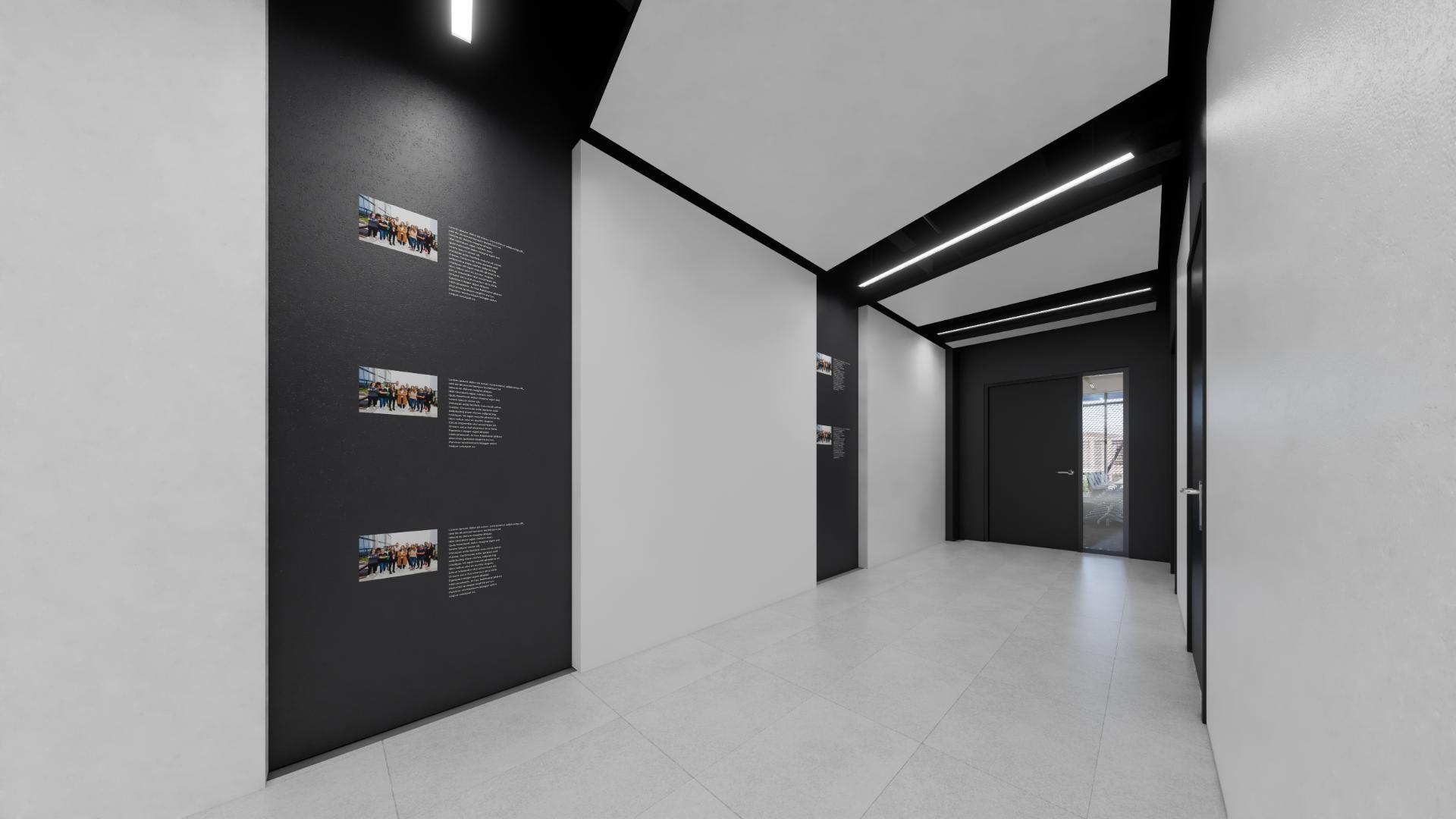 The monotony of the corridor is playfully broken up by the darker color painted in the corner of the logo (Source: BuildEXT)
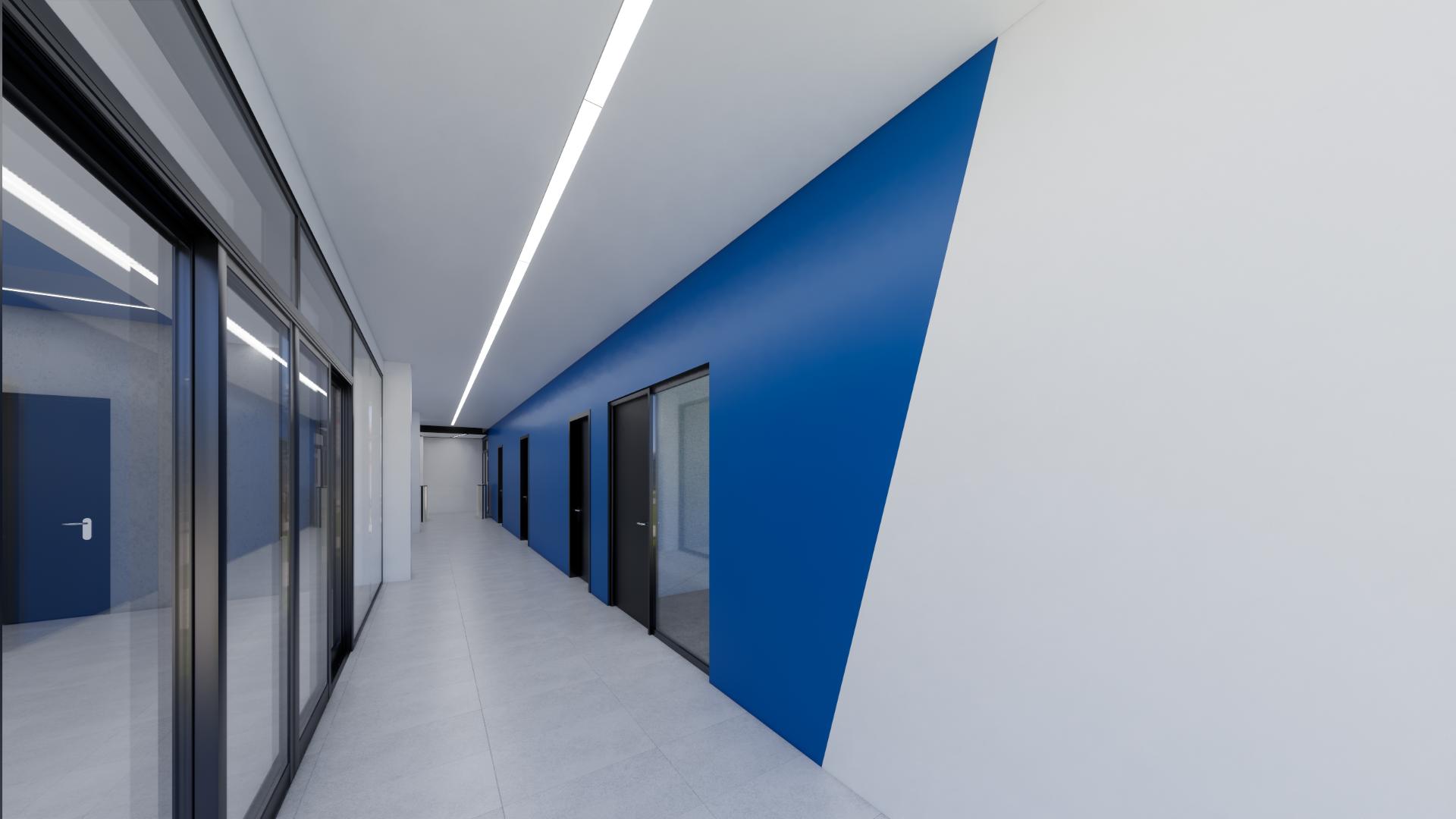 Use of brand elements in the corridor connecting the towers (Source: BuildEXT)
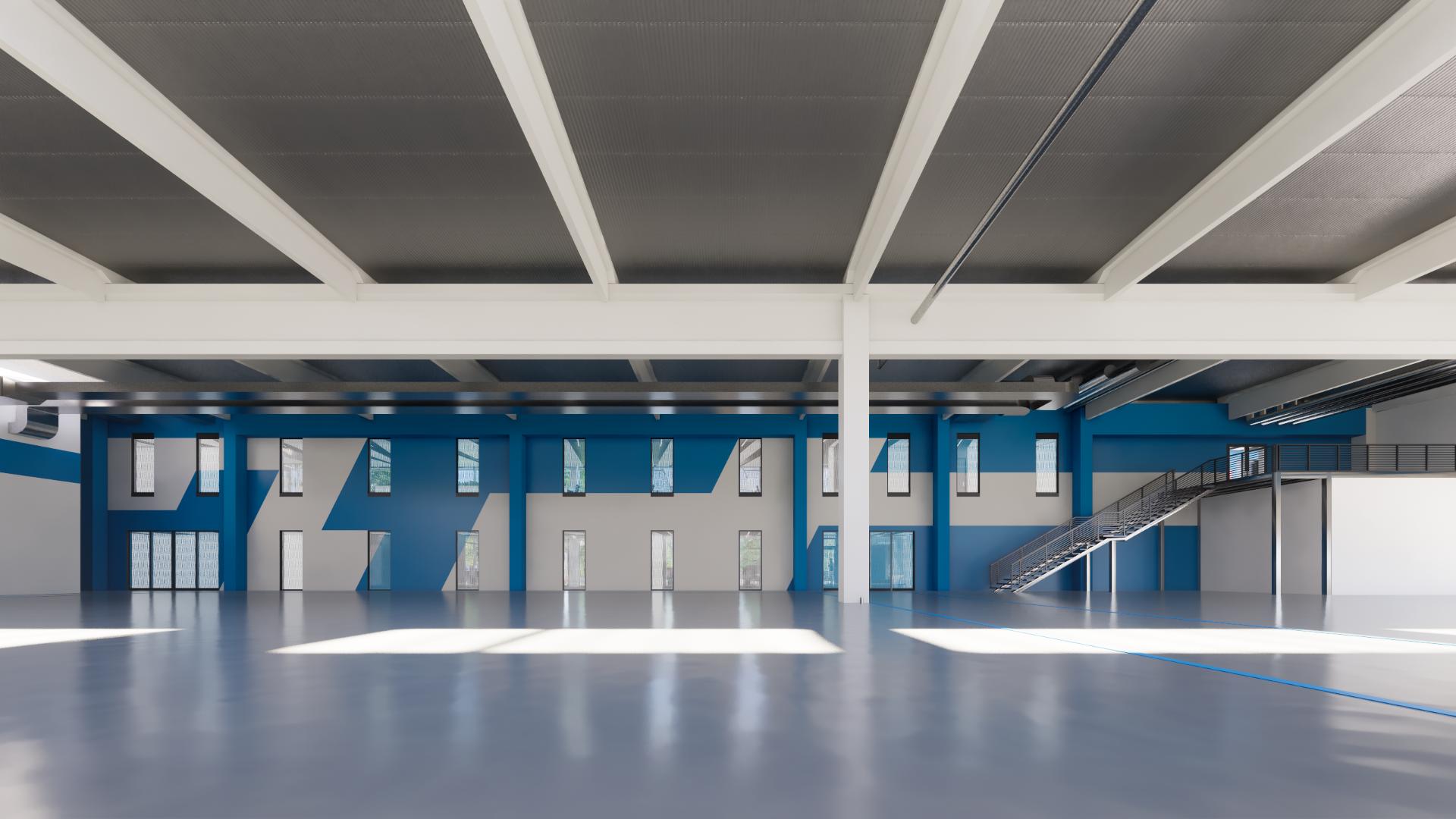 Brand elements in the factory area (Source: BuildEXT)
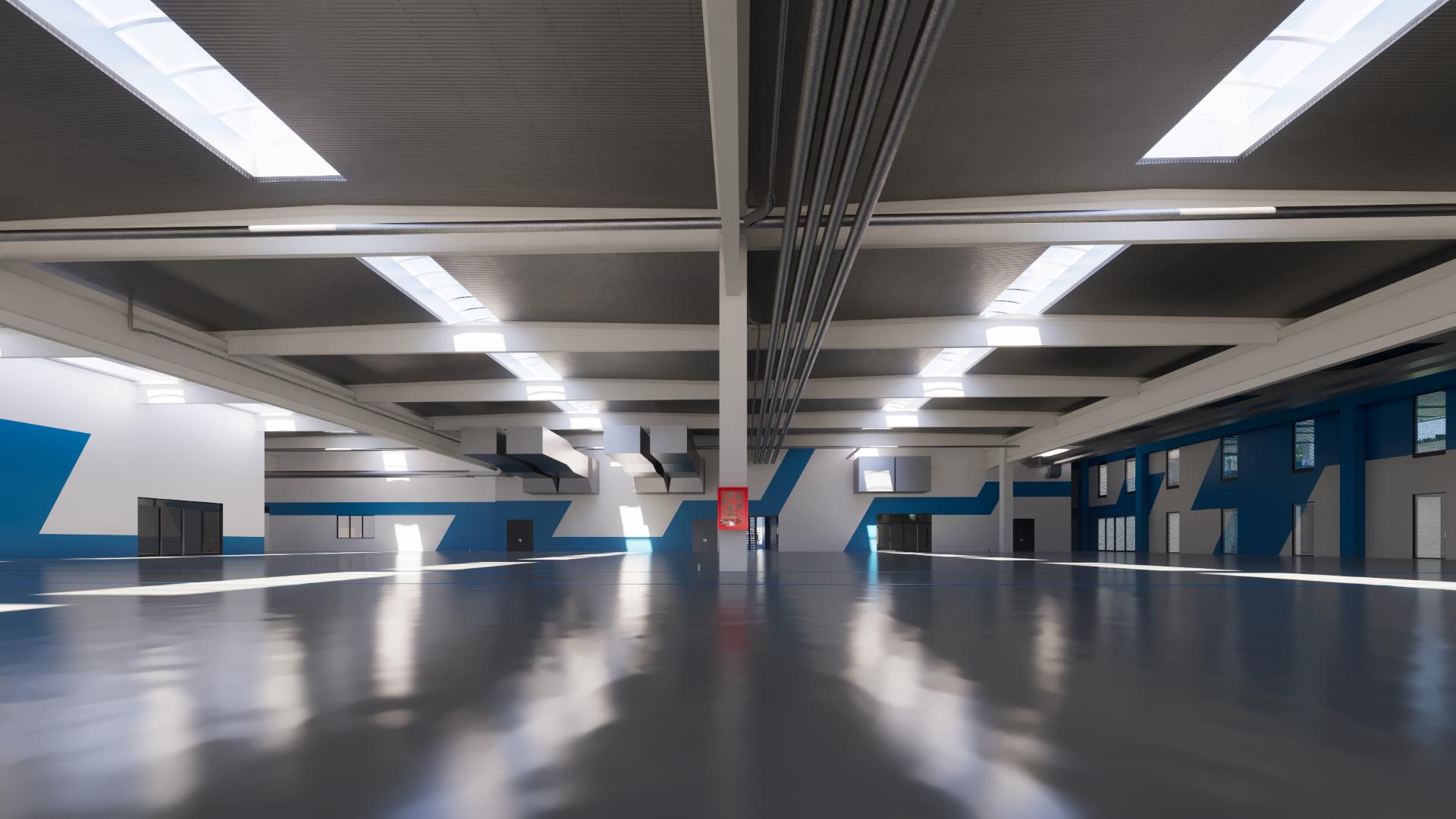 Brand elements in the factory area (Source: BuildEXT)
 Brand elements in the factory area (Source: BuildEXT)
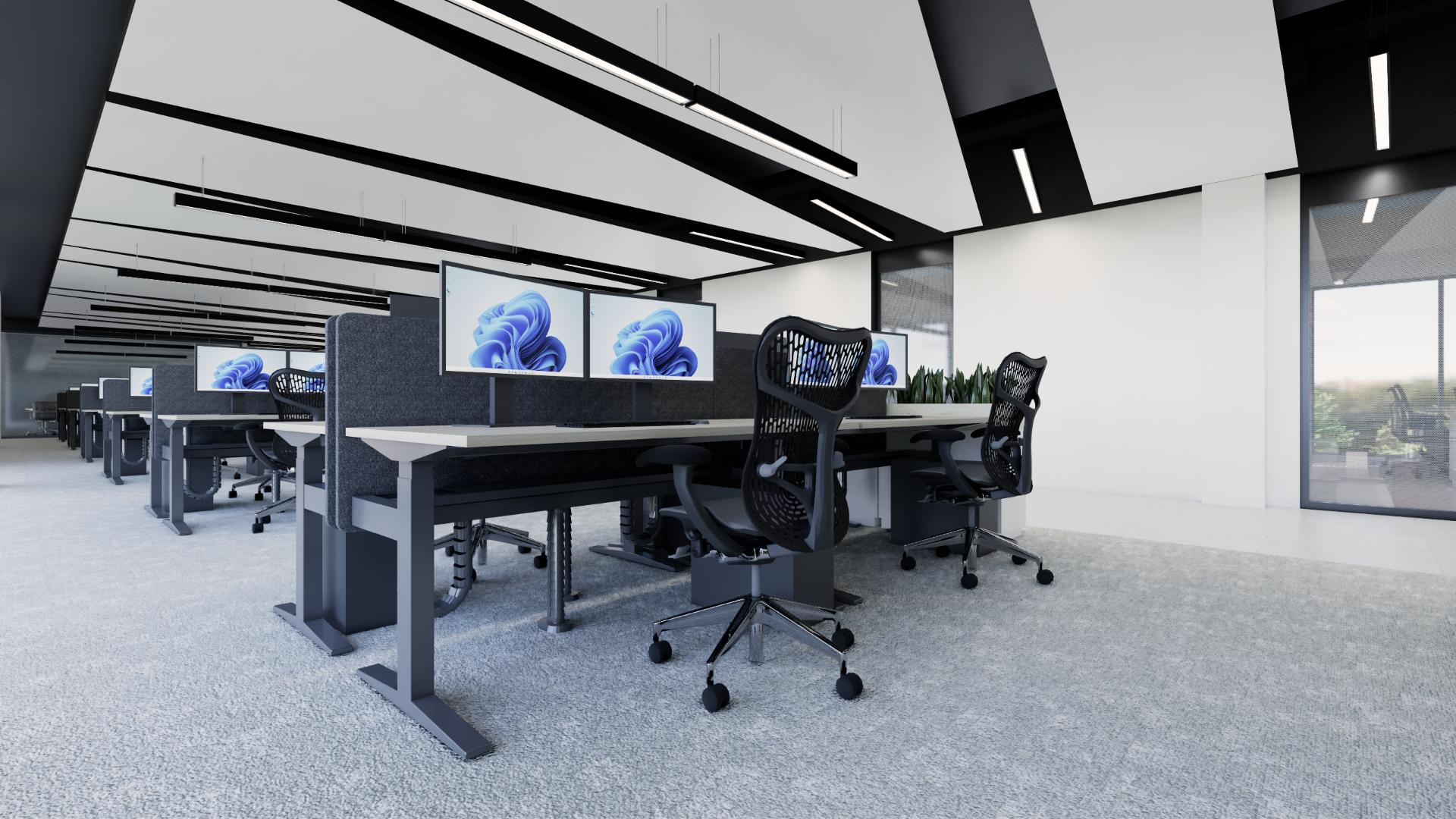 Brand elements in the factory area (Source: BuildEXT)
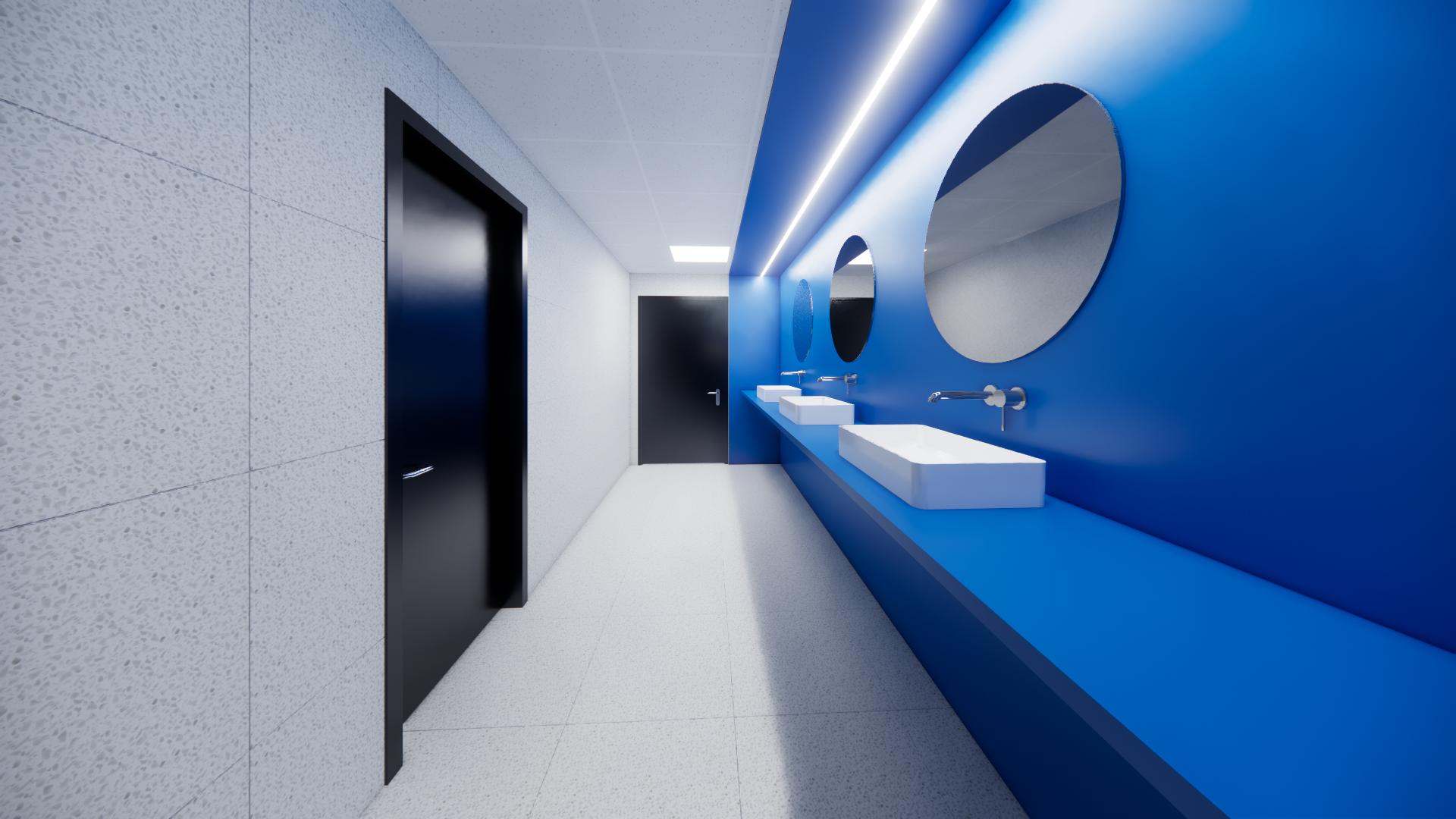 A clean-lined washbasin with strong characteristics (Source: BuildEXT)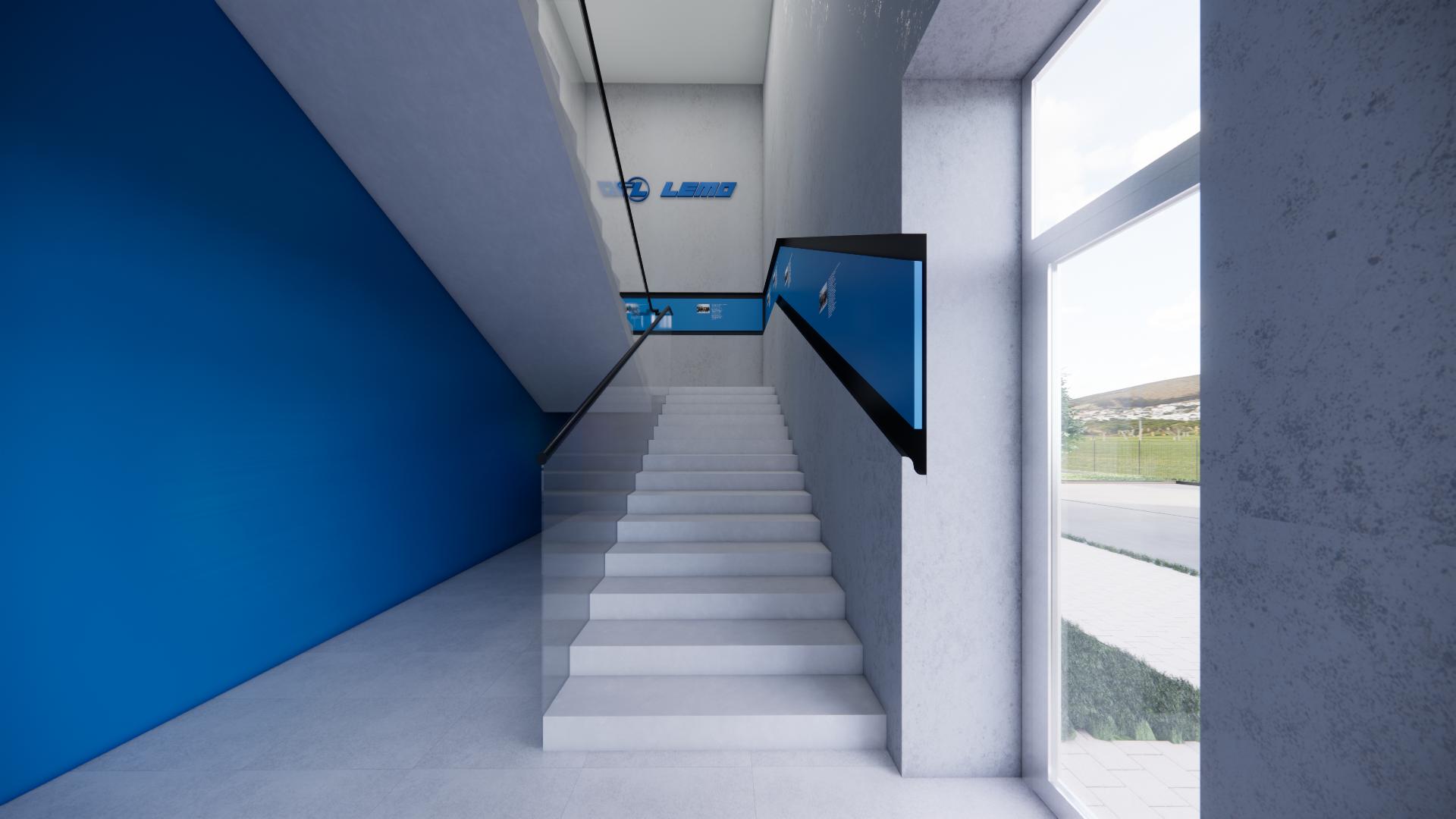
The renovation of the company’s premises proves that integrated design of industrial and office functions can be innovative, sustainable, and aesthetic at the same time – a great project for the future.
Team
BuildEXT
Project manager and lead designer: Attila Tóth, architect
Architectural design team: Ádám Bujtás, András Cédl, Fanni Fehér, Kornélia Kenyeres, Bence Krajnyák N., Adél Nyeste, Dóra Rences, András Tatos, Dániel Zemó, Csaba Végh
Interior design: Dávid Cserháti
Building services engineers: András Manherz, Zsolt Czirok, Péter Tóth, Barnabás Horváth, Tamás Borsay
Electrical engineers: Tamás Domonics, Ottó Nemesvári, Csaba Rasztik, Kornél Szinyéri, Máté Zahora
Külsős szakágak
Structural engineer: János Fejes
Fire safety engineer: Zsolt Fenyvesi
Environmental protection: Balázs Németh
Road engineer: Krisztina Grosz
Utilities engineer: Gábor Kóczán
Landscape designer: Edmond Kelemen, Soma Gulyás
Acoustics: Róbert Csott
Kitchen technology: Miklós Kertész
Accessibility: Ildikó Kakusziné Tamasy
Photos & CGI
BuildEXT

Related projects
Frontiers Campus
Design of a world-class research, healthcare and office building on an undeveloped plot within the Infopark university campus.
read more
Continental site
As part of an investment of more than €30 million for Continental, one of the world’s leading automotive companies, we designed a complete site of 30 100 m2 in 5 phases over 5 years using BIM methodology.
read more
Academia
Interior redesign of the representative Danube-side office building of the Academia. The project involved the design of 1800 m2 of community, commercial and office space.
read more