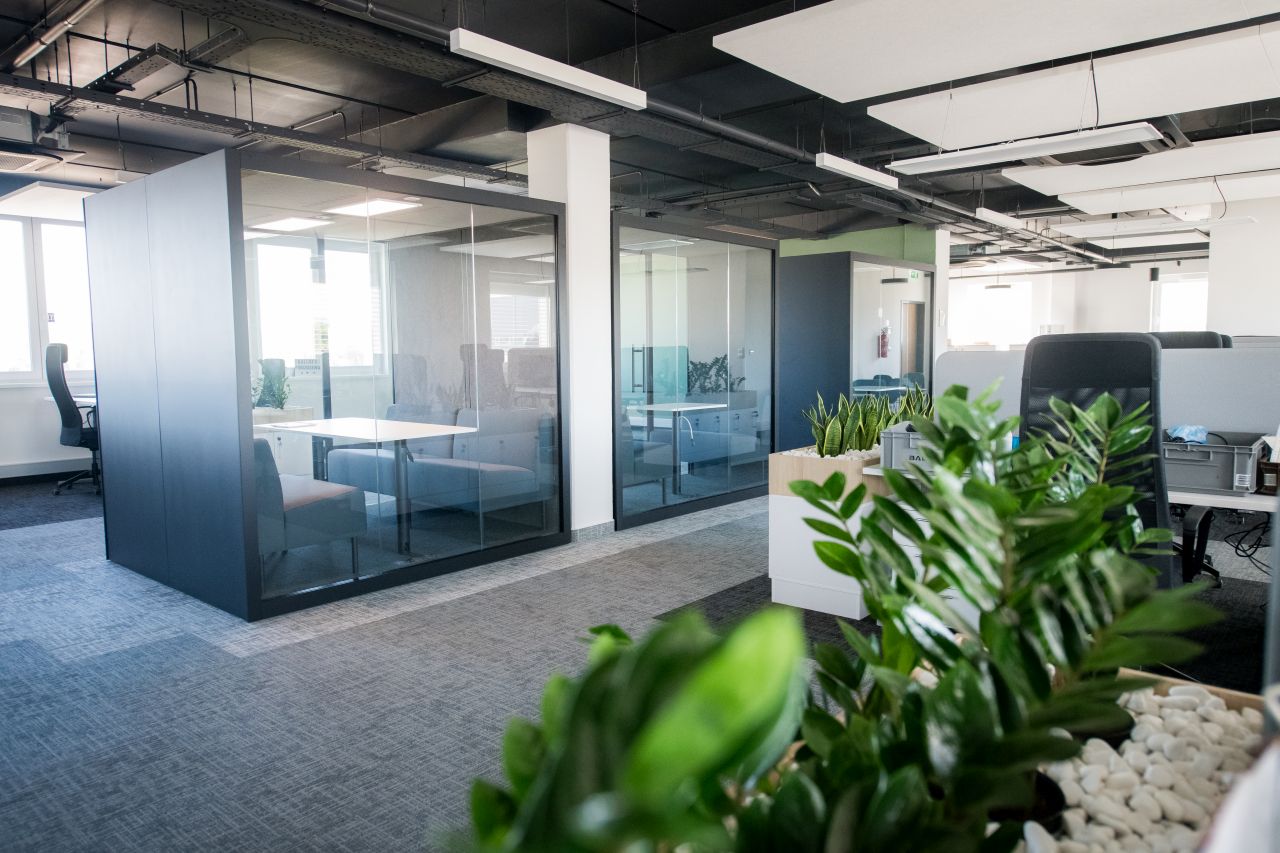
DESIGN · STUDIO 04
Interior by BX
Design of workplaces, community spaces and business interiors based on function, brand, user experience, cost control and buildability.
DESIGN · STUDIO 04
Interior by BX
Design of workplaces, community spaces and business interiors based on function, brand, user experience, cost control and buildability.
How we help
In interior design, we translate organisational operation, user needs, brand and budget into spatial and functional decisions. We design business interiors that support everyday operation with high quality, data-driven thinking and a well-controlled process.
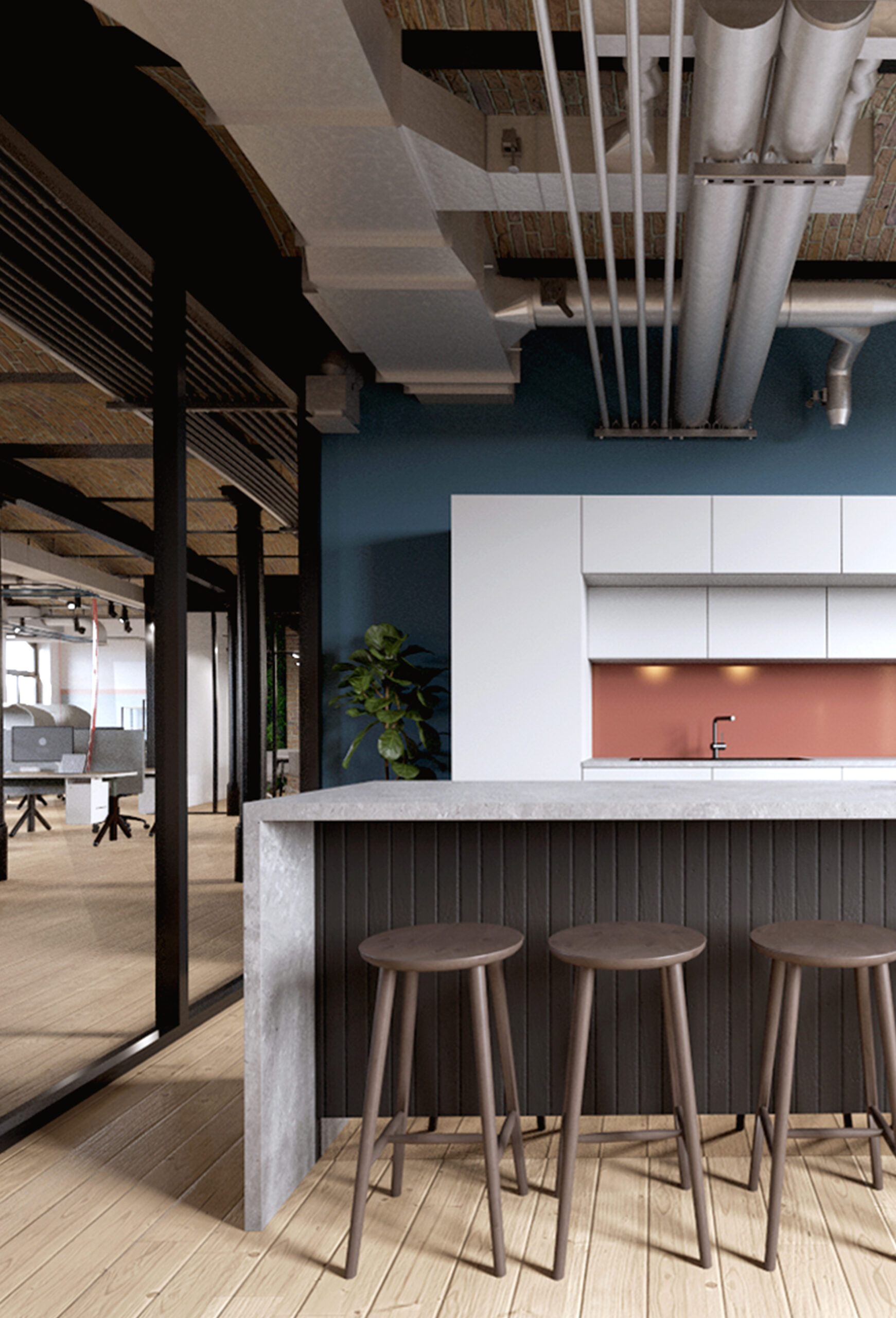
BUSINESS FOUNDATIONS
The role of the office has changed
As a result of hybrid work, the office is no longer just a workplace. It is a meeting point, a brand space, a collaboration hub and one of the strongest tools of employee experience.
A well-designed interior affects productivity, focused work, teamwork, fluctuation, employer branding and operating costs as well – in other words, interior design is a serious business decision.
This is especially important when:
- the organisation is moving into a new office,
- the operation of an existing office needs to be rethought,
- a more flexible space structure is needed for hybrid work,
- employee experience and wellbeing are key priorities,
- the spatial expression of the brand is important,
- many suppliers, manufacturers, contractors and decision-makers are involved in the fit-out process.
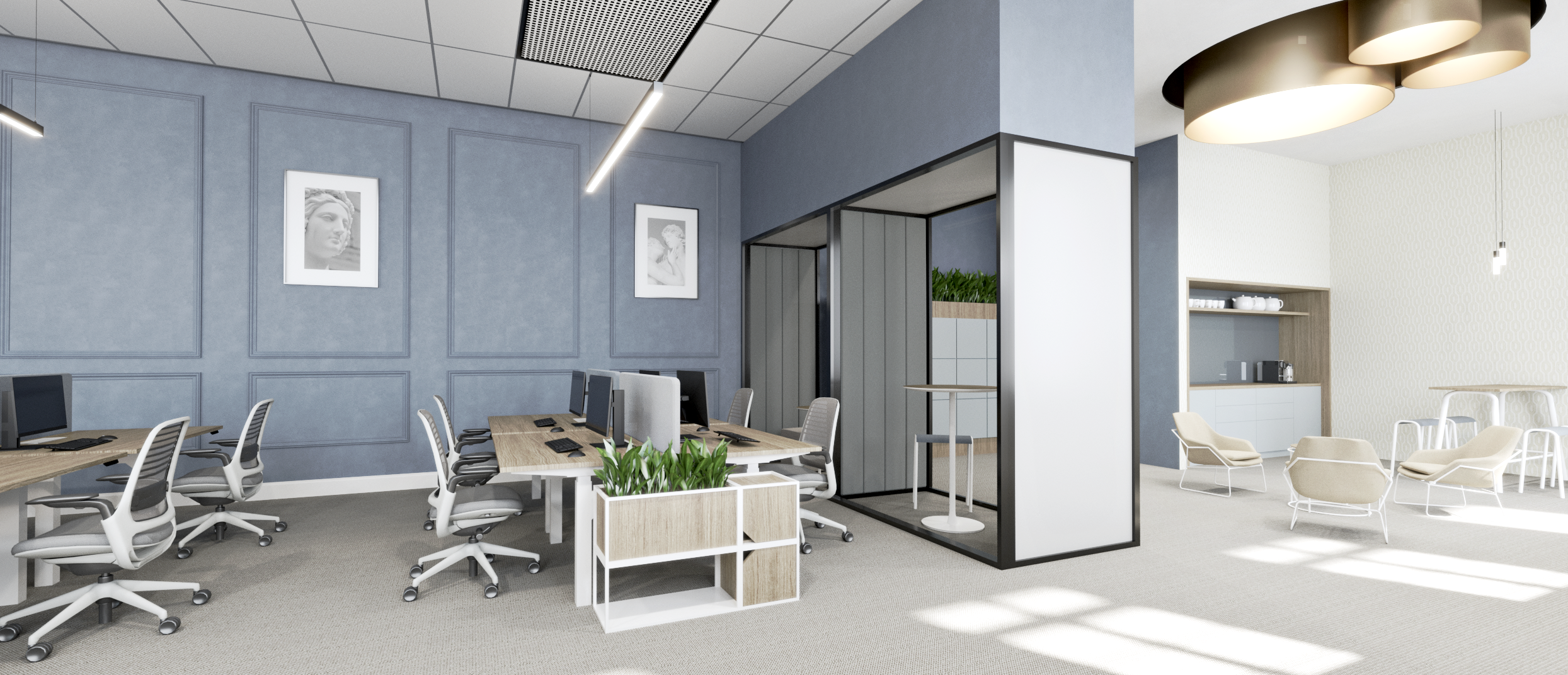
Interior design takes place within the same closed BIM environment as architectural and engineering design, ensuring that material selection, lighting design, and acoustics are coordinated from the very beginning.
OUR APPROACH
Data-driven spatial experience
The aim of interior design is to make the client’s, users’, procurement, operation and construction aspects meet already at the early decision-making stage.
At the beginning of the project, we understand the organisation’s operation, working habits, space-use problems, budget and long-term needs. The concept, space plan, product selection and implementation strategy are built on this.
01
Workplace audit and needs assessment
We start the project by understanding the client and the users. We map the organisation’s operation, work types, space-use problems, collaboration needs, the conditions for focused work and the potential for future changes.
The audit helps clarify what kind of space is actually needed, where there is unused capacity, where functions are missing, and which decisions affect usability, cost and operation.
02
Space planning & test fit
We align the required functions with the available area, organisational operation and budget. We examine several layout options and compare the proportions of workstations, meeting rooms, focus areas, community zones and support functions.
Before choosing a new office or relocating, a test fit can also support property selection. The size of the leased space, floor plan characteristics, mechanical possibilities, daylight conditions, circulation system and future adaptability can all be assessed before the decision is made.
03
Concept, brand and wellbeing
In the interior design concept, we define the character, material use, colours, lighting direction, furniture direction and atmosphere of the space. We do not treat the brand as a logo on the wall, but as a spatial experience: in proportions, materials, details, wayfinding and user experience.
Wellbeing aspects appear in space use, acoustics, lighting, ergonomics, green areas, relaxation zones and focus areas. The aim is to create a working environment that supports productivity, concentration, collaboration and wellbeing.
04
Visualisation and decision support
We support decisions with visualisations, moodboards, material samples, AR/VR tools and walk-through digital models. This is especially useful when many stakeholders need to form a shared understanding of the planned space.
Visualisation speeds up coordination, reduces misunderstandings and helps make timely decisions on issues that could later cause cost increases, redesign or construction risks.
05
BIM-based fit-out detailed design
We prepare interior design construction documentation with consideration of the technical requirements of the disciplines. Electrical, mechanical, fire safety, IT/AV, lighting and acoustic aspects are coordinated already during the design process.
With a BIM-based working method, dimensions, quantities, products, installation situations and discipline interfaces can be handled more accurately. This also supports cost estimation, tendering and construction coordination.
06
FF&E, furniture, materials and supplier system
Furniture, lighting, accessories, materials and built-in elements are among the most defining parts of the user experience. That is why product selection, quality, availability, compatibility, warranty, maintainability and long-term value retention all receive special attention.
We work with a curated group of manufacturers and suppliers. The client does not have to navigate catalogues, sales offers and separate contractor proposals alone: we help select solutions that fit the project in terms of value for money, quality and operation.
07
Fit-out project management and handover
The success of an interior design project is decided during implementation. We support the development of the tender structure, the evaluation of contractor and supplier offers, cost and schedule control, coordination meetings and the management of open issues.
The aim of fit-out project management is to give the client a clear overview of decisions, costs, changes and deadlines. At handover, we also organise the documentation, product data and operational information, so the space is not only completed, but ready to be used.
INFORMATION CONTINUITY IN A COMMON DATA ENVIRONMENT
From user needs to an operation-ready interior
Many decisions are made in interior design about space use, products, costs, changes and approvals. We keep these traceable in a common data environment, so the project is not built from scattered discussions, but from information that is also usable for construction and operation.
01 Recording user needs and space-use data
Based on audits, questionnaires, interviews, workshops and existing space-use experience, we record the project’s starting data.
➔ more accurate space programme, less risk.
02 Managing the space plan and functional programme
Data on workstations, meeting rooms, focus areas, collaboration zones, community spaces and support functions are entered into a traceable system.
➔ clearer decisions, better area efficiency.
03 Documenting concept decisions
Materials, colours, moods, brand elements, lighting directions and wellbeing solutions are recorded together with the decision background.
➔ more traceable design direction, fewer reopened questions.
04 Structuring products, furniture and materials
Data on furniture, lighting, finishes, acoustic elements, AV/IT devices and custom built-in elements are organised and brought into the project.
➔ more accurate procurement, better cost control.
05 Coordinating fit-out detailed design information
Interior design, electrical, mechanical, fire safety, IT/AV and lighting information can be handled in a common design logic.
➔ fewer construction clashes, faster on-site decisions.
06 Preparing handover and operation data
Product data, warranties, maintenance information, built-in elements and room data remain available in a usable form at handover as well.
➔ more organised handover, easier operation.
THREE DIMENSIONS, ONE PLATFORM
Typical project situations
Interior design is a business decision: space use, organisational operation, employee experience, budget and implementation all matter at the same time. BuildEXT manages these aspects in one process and supports decisions with data, BIM-based design and fit-out project management.
01
Before choosing or moving into a new office
When selecting a new leased space or own office, the size of the area, floor plan characteristics, mechanical possibilities and long-term flexibility are key factors. Test fit and space planning help show in time which property fits the organisation’s operation.
02
Transformation of an existing office
When working methods, team sizes or user needs change, the existing space often no longer supports operation properly. In such cases, the audit and space planning help identify where the space needs to be changed and where smaller interventions are enough.
03
Hybrid operation and wellbeing development
Hybrid work requires new proportions between focus areas, meeting rooms, phone boxes, community zones and flexible workplaces. In these cases, wellbeing aspects also support productivity and employee retention.
04
Representative or client-facing spaces
In the case of lobbies, receptions, meeting rooms, community spaces and client-facing zones, interior design has a direct impact on brand perception. The space must work well, be easy to use and represent the organisation credibly at the same time.
CASE STUDIES
Specific interior design tasks
The value of interior design becomes truly visible when the space has to support everyday operation, the brand and the employee experience at the same time, within the available budget. The following projects show, in different situations, how data-driven interior design supports client decisions and implementation.
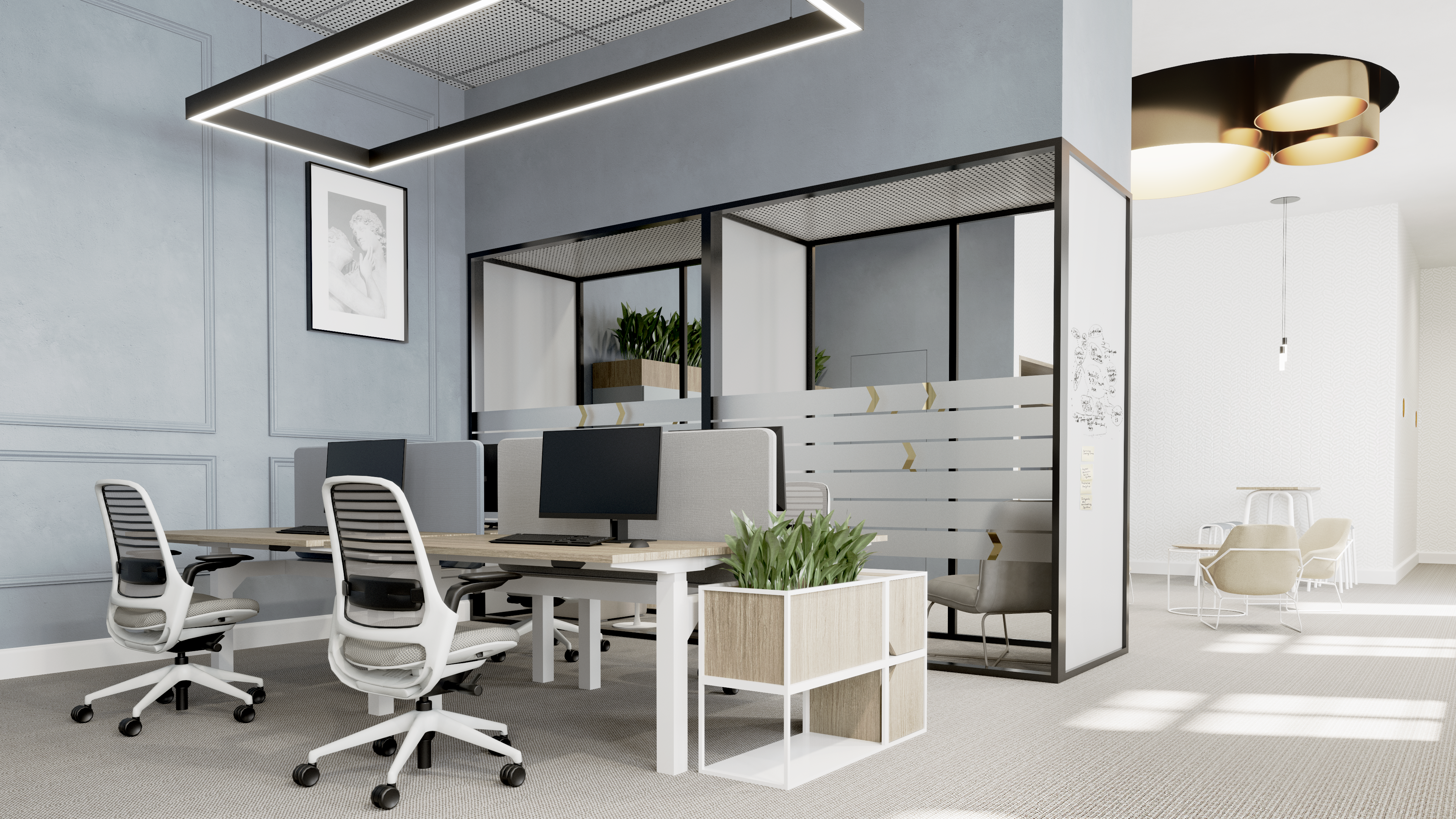
Modern financial centre with hybrid office functions
For an organisation with critical operations, the office must be secure, representative, easy to use and sustainable in the long term at the same time. Here, interior design decisions also support work processes, client experience and the continuity of organisational operation.
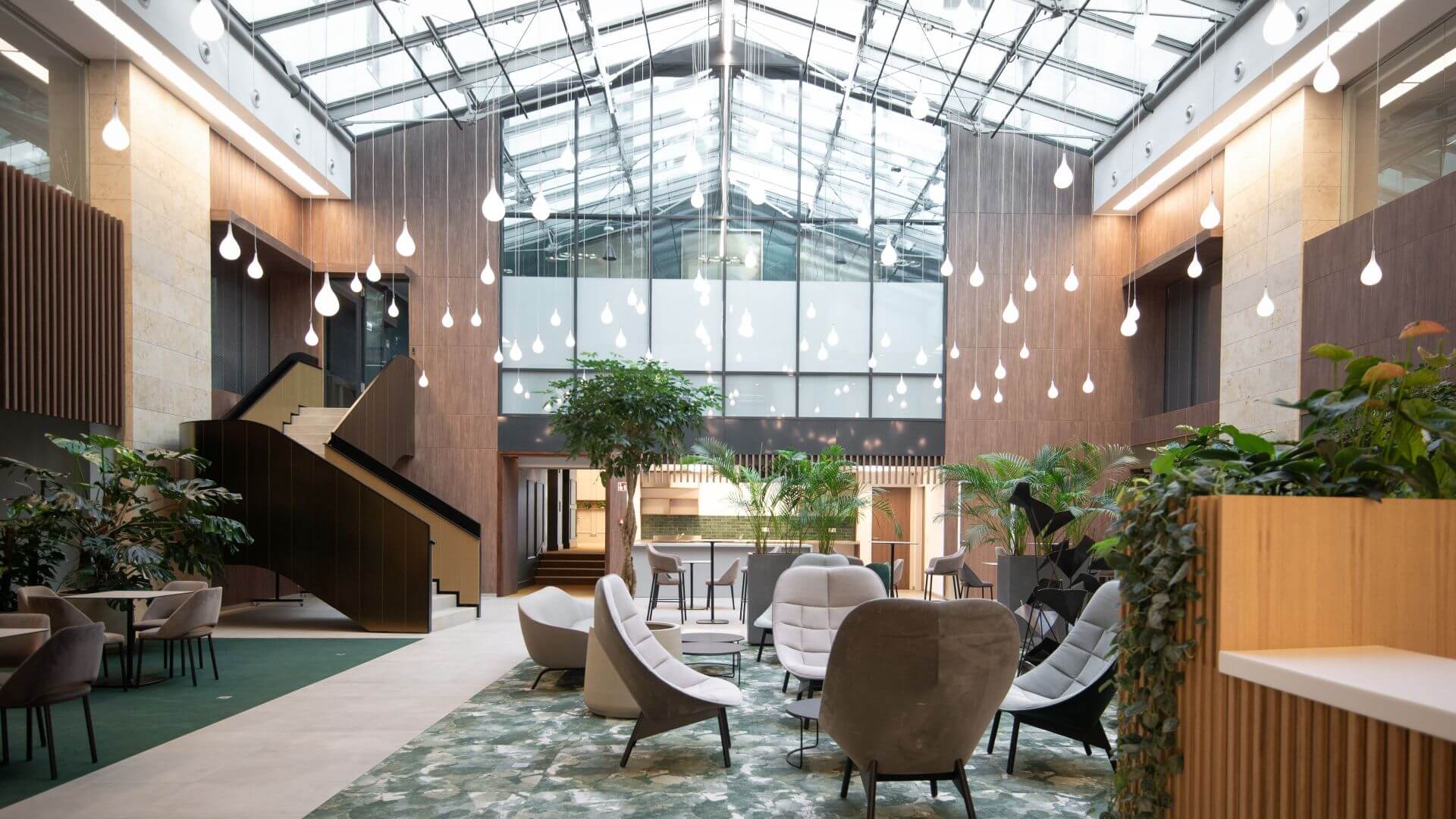
Multifunctional spaces in a renewing working environment
In the transformation of a large office building, the proportion, operation and spatial experience of community, commercial and office functions together shape the success of the project. The role of interior design is to make the needs of different user groups appear within a consistent spatial logic.
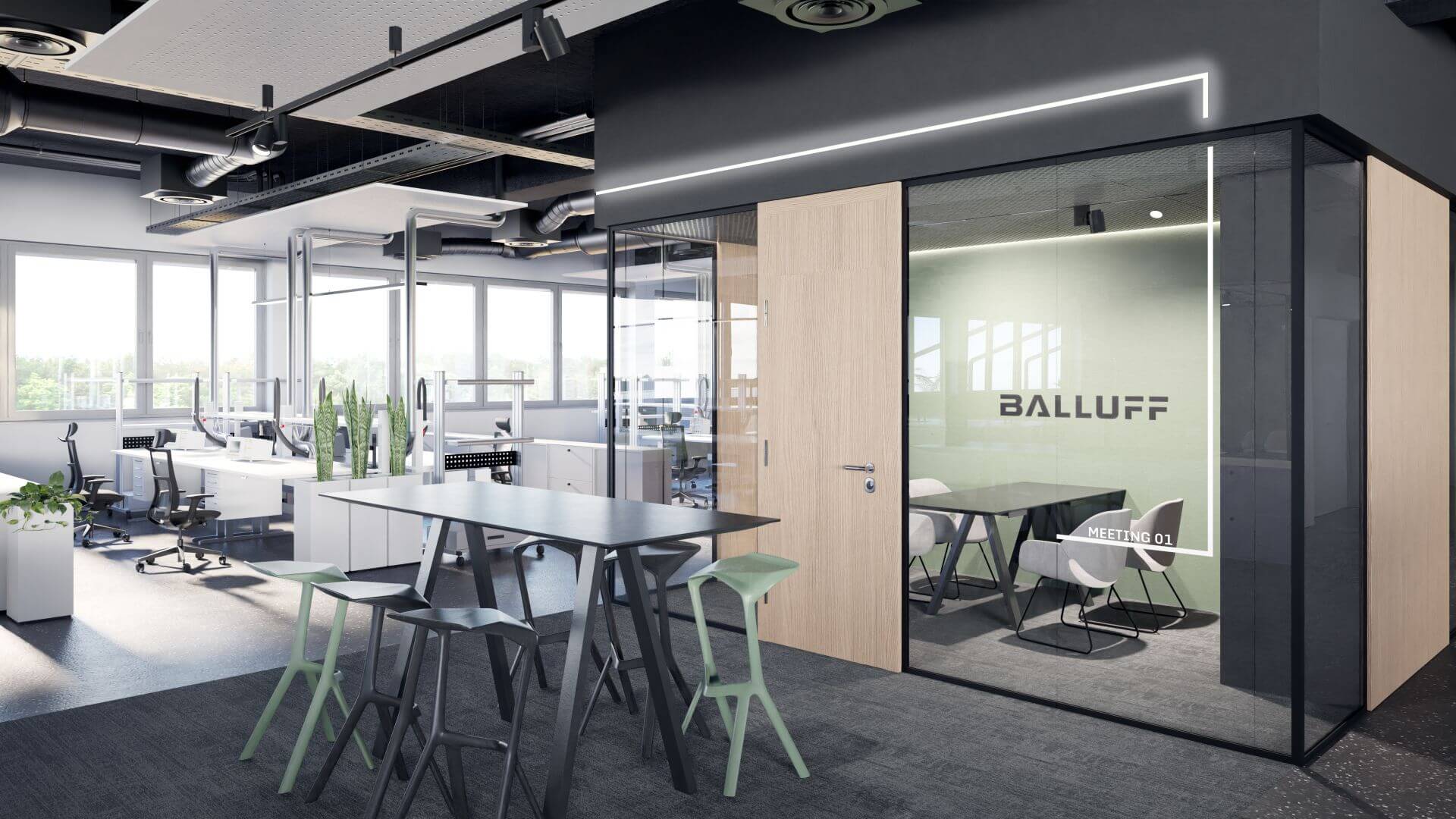
Office function in an existing building
Alongside existing architectural and discipline-specific conditions, one of the main tasks of interior design is to coordinate space use, work processes, brand and buildability. In this situation, a good office does not restart the building from scratch, but gets the most out of the existing possibilities.
300 000 m²
ANNUAL PROJECT VOLUME
150
ENGINEERS
2008
FOUNDED
ISO 19650
CERTIFICATION
I was very satisfied with the BuildEXT team. They worked quickly and delivered more than I expected.
STAFFING COMPANY, CEO, BUDAPEST
CONTACT
Are you about to start a project?
Let’s talk about it in advance.
During an initial technical meeting, we will review the current status of the project, the decisions that need to be made, and which design, technical, or BIM coordination issues should be addressed early on.
No strings attached and no obligation to accept an offer.
HEADQUARTERS
BuildEXT Ltd.
1027 Budapest, Horvát utca 14-24.
ZenGarden Office Building
+36 1 345 2000
INTERNATIONAL OFFICE
BuildEXT GmbH
Maximilianstrasse 27
80539 München