DESIGN · STUDIO 05
Engineering by BX
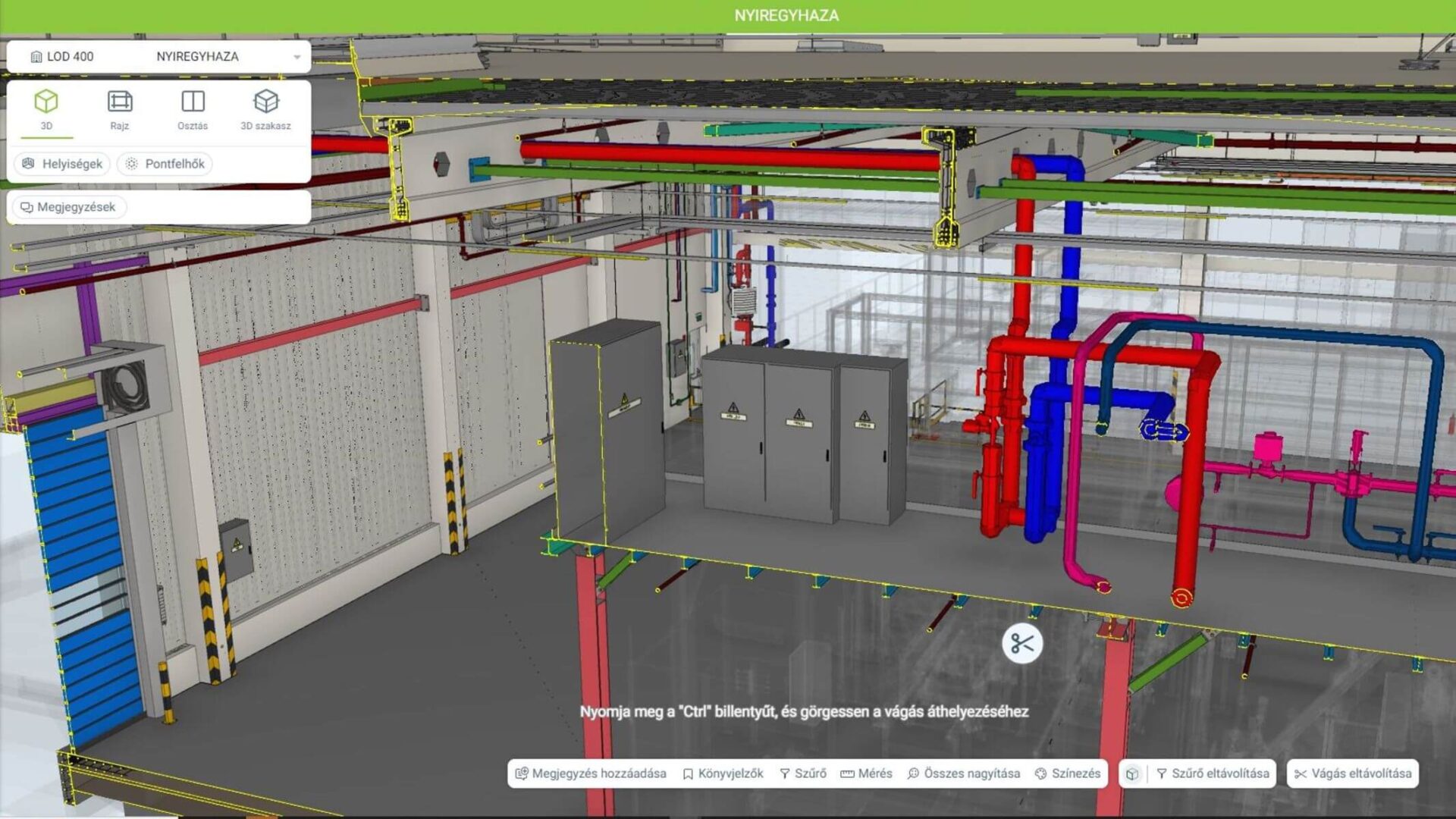
Design of mechanical and electrical systems in a coordinated BIM-based process, taking investor goals, operational requirements and constructability into account.
DESIGN · STUDIO 05
Engineering by BX
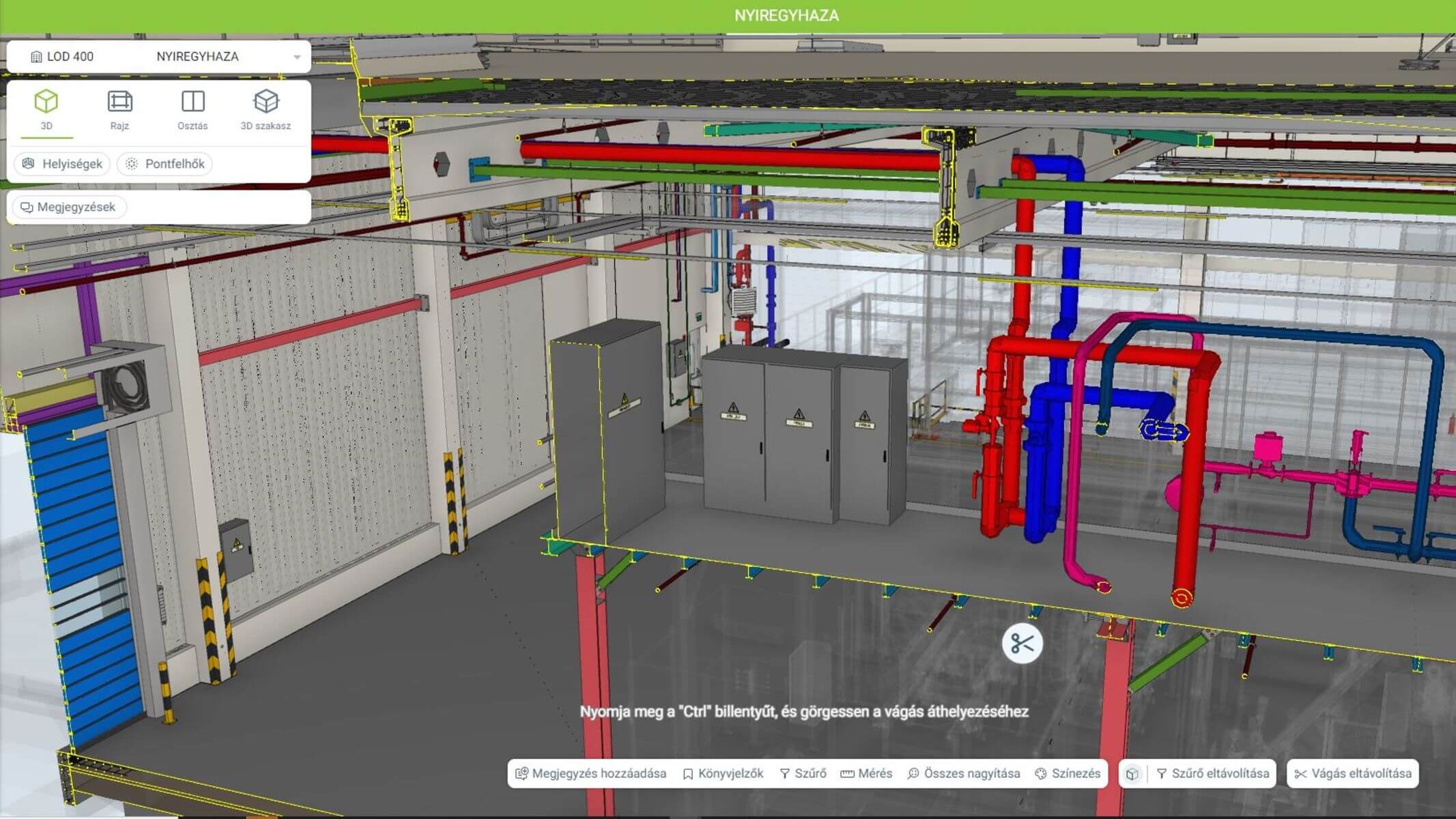
Szakági rendszerek tervezése összehangolt BIM-alapú folyamatban, a beruházói célok, az üzemeltetési szempontok és a kivitelezhetőség figyelembevételével.
HOW WE WORK
In the long term, building mechanical and electrical systems represent one of the building’s largest cost factors, not only in terms of the initial investment but also over the building’s entire lifespan. A well-thought-out design can deliver significant savings in energy consumption and operating costs, in addition to ensuring comfort and safe operation. We examine these factors together with architectural, structural, technological, feasibility, and operational considerations from the very early stages.

PROJECT FOUNDATIONS
The heart and nervous system of a building
Mechanical and electrical systems have a significant impact on the extent to which a building can be used according to the client’s needs, adapted flexibly, and operated cost-effectively.
In the BuildEXT design workflow
- we dimension and analyze the mechanical and electrical systems using a BIM model, which allows us to plan shafts, suspended ceiling zones, mechanical rooms, and rooftop equipment well in advance;
- we coordinate the building systems with architectural, structural, and technological decisions, thereby minimizing conflicts in the construction drawings and during construction;
- we will compare the main system alternatives in terms of both capital and operating costs so that the decision is justifiable from both a CAPEX and OPEX perspective;
- enables the prefabrication of mechanical systems, making installation cheaper, faster, and simpler;
- quantities and technical data extracted from the model make cost estimation, tendering and later operational handover more traceable.

Through closed BIM-based discipline coordination, we minimize the number of construction conflicts and rework. For the client, this translates to 20–40% lower construction costs and significantly shorter lead times.
OUR APPROACH
Engineering control in a Common Data Environment
Automated checks make the documentation faster and more accurate, while our support through construction and operation helps ensure that the systems work reliably in the long term.
Our designs and models are capable of complying with international regulations and standards (such as ISO, EN, FM, and LEED). We have integrated our calculation methods into our Revit-based BIM ecosystem.
Whether it’s an office building, a laboratory, or a custom industrial facility, our building services engineering design is always integrated and efficient.
01
Mechanical Design
Building services engineering is at the heart of a building’s operation—flawless engineering designs ensure comfort, energy efficiency, and safety. BuildEXT’s engineering design team delivers all of this through a BIM-based, integrated process, ensuring that the designs are not only accurate but also support the building’s entire life cycle.
Thanks to our in-house developments and AI-based automation, our work is faster and more reliable, and our support—from implementation through to operation—ensures that our designs deliver long-term value.
For existing buildings, assessing the condition and capacity of current systems plays a key role, which we support with our in-house scan-to-BIM service.
02
Electrical Design
The electrical system is the building’s invisible nervous system; without it, there can be no safety, efficiency, or future-readiness. We extract the data needed for electrical designs from models and provide a comprehensive, model-based service covering the planned equipment and systems, taking into account other disciplines throughout the project’s entire life cycle.
In addition to the features provided by Revit, we also use electrical engineering plug-ins integrated into the software to produce high-quality drawings. This gives us an advantage in the areas of power consumption calculations, circuit design, lighting design, and grounding. For detailed drawings, we provide all of this within Revit: in addition to floor plans, we create everything from schematic diagrams to detailed distribution plans, along with accurate material take-offs.
03
Low-Voltage, Automation and BMS Connections
Low-voltage, security, automation and BMS systems play an increasingly important role in building operation. These systems cannot be treated in isolation, as they are directly connected to the electrical supply, mechanical systems, operation and user experience.
During design, we take into account the discipline connections of data networks, sensors, controls, access control, fire detection, security and building management systems, so the building remains easy to operate and develop later.
04
BIM-Based Discipline Coordination
Mechanical and electrical systems require significant space and often pass through the same critical zones: suspended ceilings, shafts, plant rooms, roofs, technological areas or existing structures.
The goal of BIM-based coordination is to prevent these conflicts from appearing during construction. We check space requirements, routes, clashes and access zones in the model. This results in a more accurate construction design, a clearer tender package and fewer on-site redesign tasks.
INFORMATION CONTINUITY IN A COMMON DATA ENVIRONMENT
From System Requirements to a Buildable Design
We channel all design data into a structured system, whether it comes from a standard or project-specific design element. Using the opportunities of closed BIM technology and added parametric data, we create complete models and designs at every stage of the design process, from concept phase to building handover, including facility management models.
01 Initial Data and Capacities
Existing systems, utility connections, electrical capacities, mechanical space requirements, user requirements and technological needs are collected.
➔ less uncertainty, faster system concept.
02 Comparison of System Alternatives
Possible mechanical and electrical solutions are assessed based on investment cost, operational cost, space requirements, controllability and maintainability.
➔ fewer on-site conflicts, clearer construction design.
03 Managing Space Requirements and Discipline Clashes
Plant rooms, shafts, ceiling zones, roof-mounted equipment, distribution boards and main routes are checked in BIM.
➔ fewer on-site conflicts, clearer construction design.
04 Tracking Quantities and Technical Scope
Quantities, equipment data and system information extracted from the model and design documentation are continuously refined.
➔ better cost estimation, more transparent tender documentation.
05 Managing Construction Questions and Changes
Discipline-related questions, modifications, replacements and decisions are documented in a traceable way throughout design and construction.
➔ faster response, fewer disputes, more organised site communication.
06 Preparing handover and operation data
Documents, product data, maintenance information and model data related to the completed systems are organised.
➔ easier operation, more predictable future modifications.
THREE DIMENSIONS, ONE PLATFORM
Typical project situations
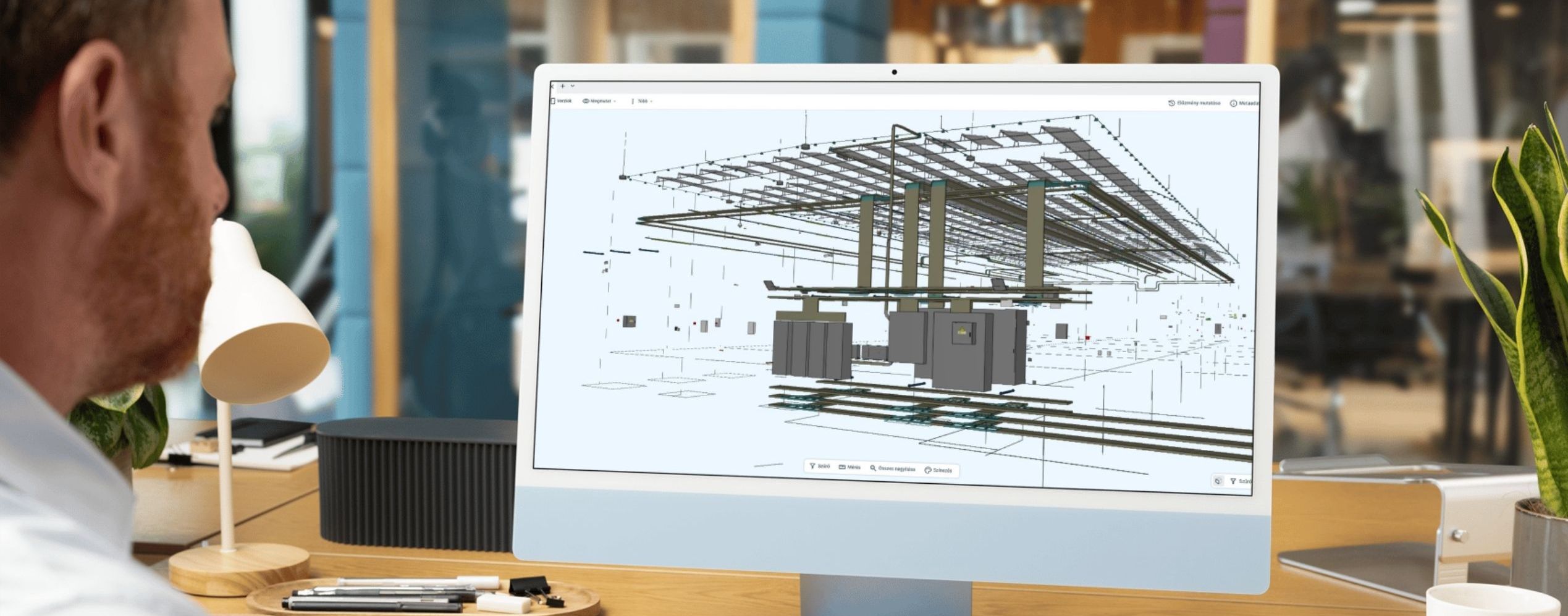
Mechanical and electrical design provides the heart, circulation and nervous system of a building, so these disciplines are involved as early as possible in the project.
01
Office building modernization
In older office buildings, the limits of mechanical and electrical systems quickly define how far an interior transformation can go. In these cases, the first step is to understand the existing condition accurately: capacities, space requirements, routes, interventions during operation and the real needs of future use.
02
Site Development
In industrial environments, discipline systems are directly connected to production, logistics and operational safety. In multi-phase developments, it is especially important for design to handle the existing infrastructure, phased construction and the technical conditions for later expansion.
03
Laboratory or Special Technology
In laboratory environments, mechanical and electrical systems are basic conditions of operation. Ventilation, cooling, power supply, security technology and automation already define the building organisation at concept stage, including the location of critical service zones and the technical reserves required.
04
Mixed-Use Building Complex
When designing a production facility and office building together, different operating rhythms must be coordinated. Industrial operation, storage, office comfort and shared spaces all create different requirements. A good MEP concept organises these into a functioning, expandable system.
CASE STUDIES
Technology in Focus
The following examples show projects where mechanical and electrical works can be seen as part of BuildEXT’s general design activity.

Sárospatak Swimming Pool
In the design of the Sárospatak swimming pool, the high mechanical requirements of the pool function were in focus. Humidity load, ventilation, pool water technology, energy use and operational reliability required coordinated design, while the building also had to provide a sustainable long-term solution for educational and community use.

Synlab Laboratory Centre
In Central and Eastern Europe’s largest medical analytics laboratory, more than 30 laboratories had to be served. The building’s mechanical systems manage approximately 400 km of pipework above suspended ceilings, sixteen types of medical gases, four types of water systems and seven different ventilation systems.
Weinberg office building
In the Weinberg office building, the ceiling and underfloor heating systems, as well as the chilled beam system, required precise discipline coordination. Through BIM-based coordination, the spatial relationships between mechanical, electrical and architectural systems could be checked during design, so no critical installation issues appeared during construction.
300 000 m²
ANNUAL PROJECT VOLUME
150
ENGINEERS
2008
FOUNDED
ISO 19650
CERTIFICATION
I would like to thank you for the support you provided in several rounds, and for your active contribution to preparing the material.
FINANCIAL INSTITUTION, DIRECTOR OF FINANCE AND HR, BUDAPEST
CONTACT
Are you about to start a project?
Let’s talk about it in advance.
During an initial technical meeting, we will review the current status of the project, the decisions that need to be made, and which design, technical, or BIM coordination issues should be addressed early on.
No strings attached and no obligation to accept an offer.
HEADQUARTERS
BuildEXT Ltd.
1027 Budapest, Horvát utca 14-24.
ZenGarden Office Building
+36 1 345 2000
INTERNATIONAL OFFICE
BuildEXT GmbH
Maximilianstrasse 27
80539 München