The winner of the BuildEXT BIM Diploma Competition 2026 was decided by audience voting at the Proptech Hungary conference
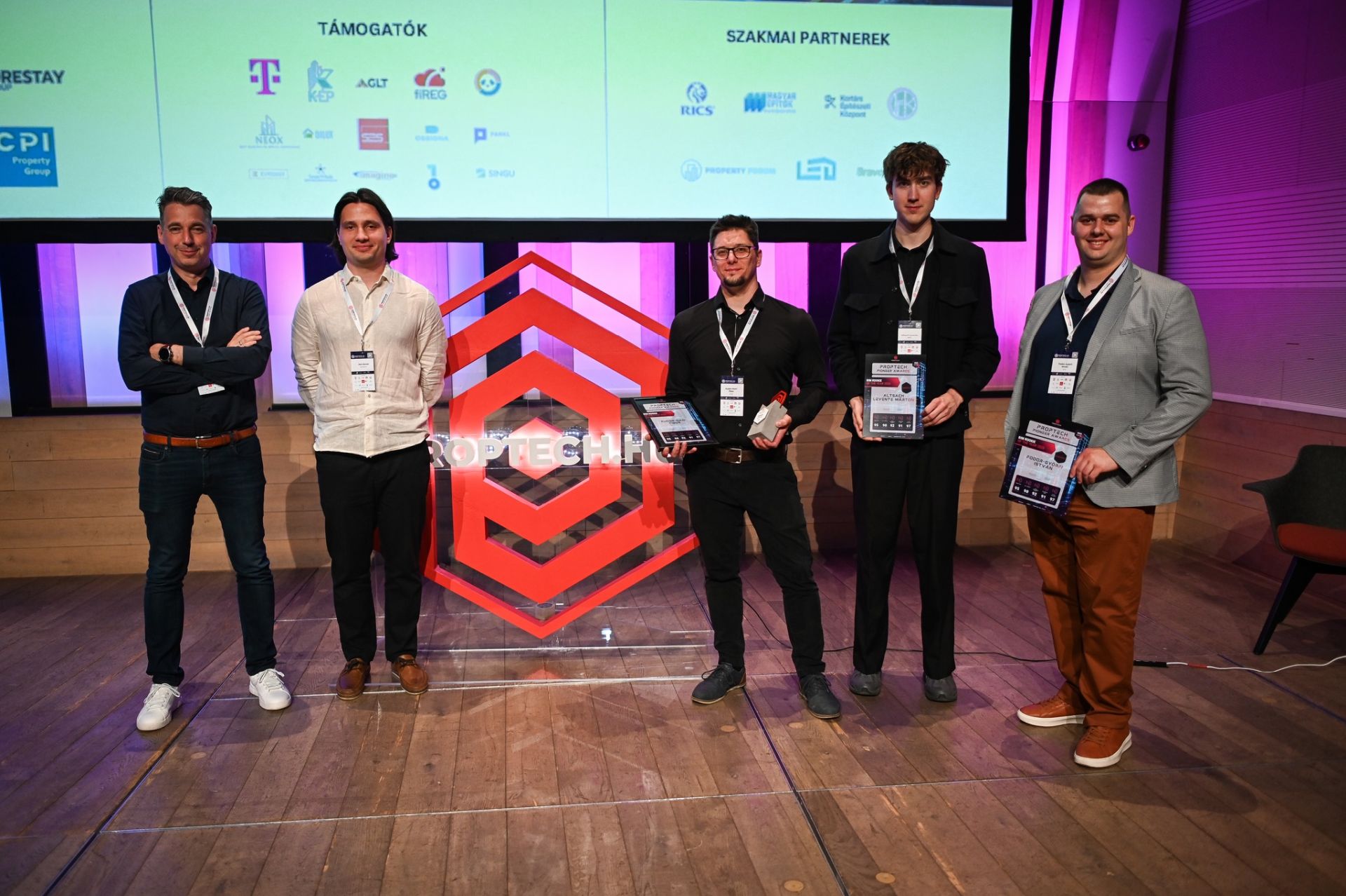
This year, the BuildEXT BIM Thesis Competition concluded in a new format at the Proptech Hungary 2026 conference: the shortlisted students presented their projects live in front of a professional audience, while the winner was decided through on-site audience voting.
The BIM Diploma Competition was launched last year to support engineering students who are open to digital design approaches and BIM-based thinking in their thesis projects. This year again, submissions arrived from multiple disciplines – including architecture, civil engineering, landscape architecture, and other technical fields.
Students could apply with BIM-oriented diploma projects and Scientific Students’ Associations Conference papers, without being restricted to a single software environment. BuildEXT’s goal is not merely to evaluate modelling skills, but to showcase how the next generation of engineers thinks in terms of structured data, digital workflows, and integrated design.
The audience decided the outcome
The BuildEXT professional jury first selected the strongest projects for the shortlist, giving the finalists the opportunity to present their work in a 3-minute pitch format at the Proptech Hungary conference.
Unlike previous years, the final rankings were not determined behind closed doors. Following the presentations, the conference audience – consisting of proptech, real estate, and construction industry professionals – voted for the applicants live using Mentimeter.
The BIM Diploma Competition block also served as the opening segment of the Proptech Pioneer Awards ceremony, where the audience likewise selected the best solutions in each category through public voting. The shared message of the two programs was openness and transparent professional feedback.
The shortlisted projects
➔ Tibor Kudor-Dani – Parametric structural optimization and form optimization
Kudor-Dani Tibor „Palazetto dello Sport kupolaszerkezet alakoptimalizálása és tervezése EC alapján” című munkájában parametrikus tervezési és optimalizációs folyamatokat mutatott be. A projekt középpontjában egy kupolaszerkezet alakoptimalizálása állt, ahol Grasshopper alapú algoritmikus tervezési módszereket kapcsolt össze szerkezeti analízissel és BIM workflow-val.
The presentation covered the force-density method, optimization processes, and the integration between Grasshopper and AxisVM. The jury specifically highlighted that the presented workflows and software usage were highly relevant to real-world digital design practice, and that the acquired knowledge shows strong potential in the fields of parametric design and structural optimization.
Based on the audience vote, Tibor Kudor-Dani ultimately won first place.

➔ Levente Altsach – Studio / Music Center
Levente’s project presented the architectural concept and digital design approach of a music center. He focused on the relationship between BIM-based design thinking and architectural concept development, placing particular emphasis on spatial organization and digital modelling workflows. The BIM-oriented mindset of the project was further demonstrated by the use of point cloud surveys to capture the relationship between the existing buildings and their environment, allowing the proposed buildings to fit precisely into the existing spatial context.
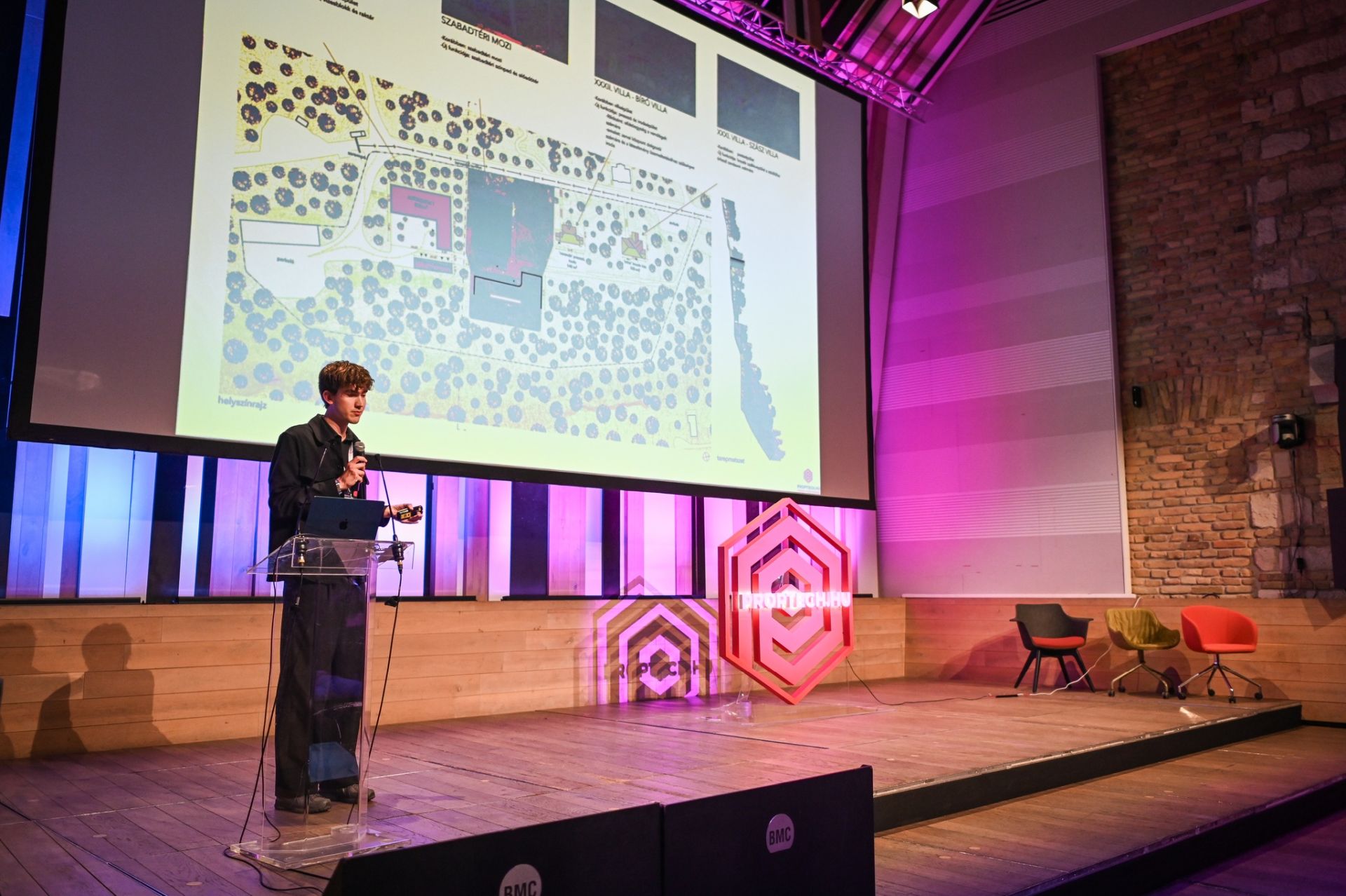
➔ István Fodor-Györfi – BIM in Landscape Architecture
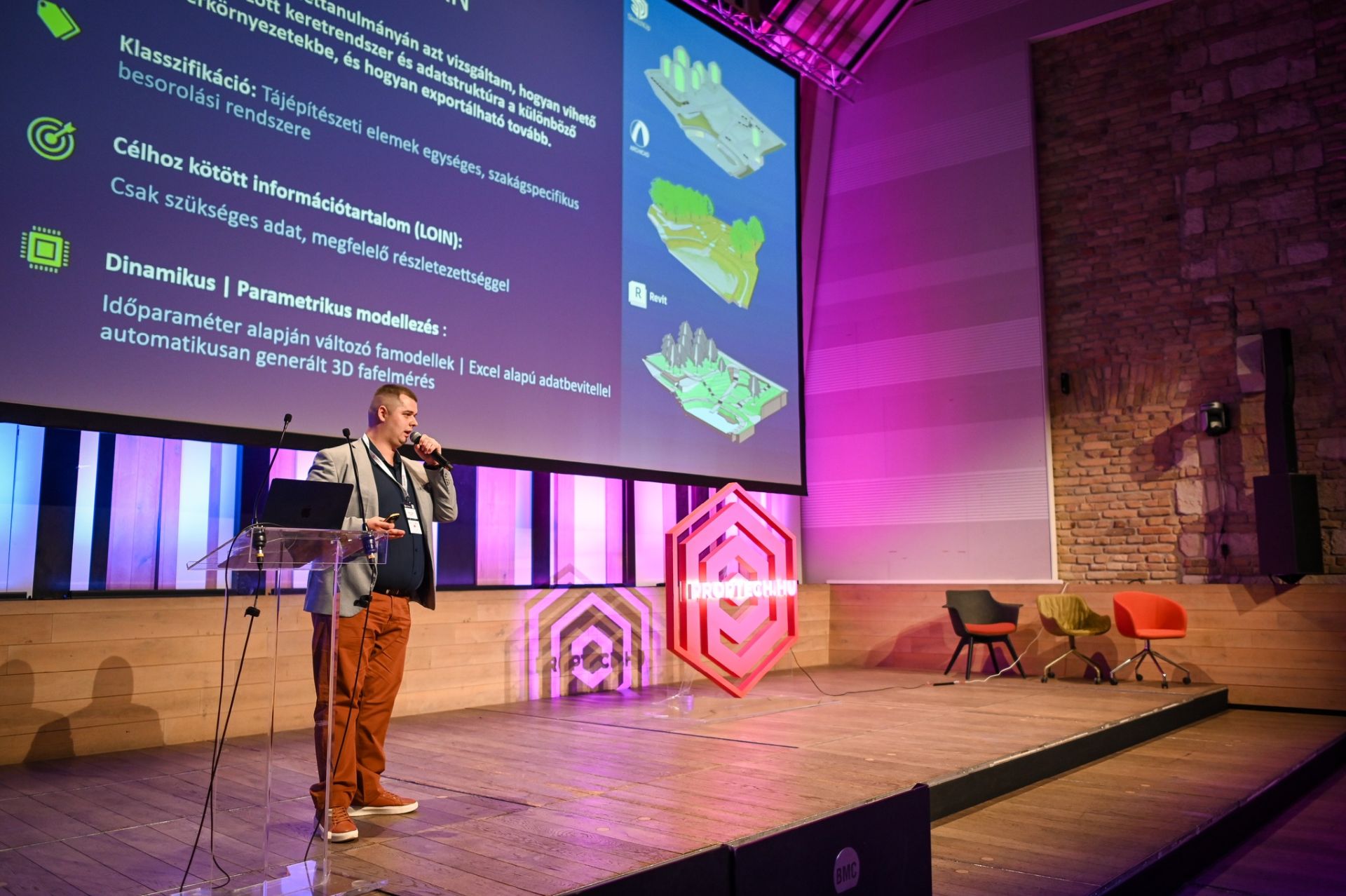
Fodor-Györfi István’s presentation demonstrated how BIM-oriented thinking can be integrated into landscape architectural design processes. Using the Feneketlen Lake case study, he explored how a data structure and framework can be created that remains functional across multiple software environments.
A key message of the presentation was that digitalization does not stop at the walls of buildings. Information-based design, structured model usage, and interoperability are becoming increasingly important in landscape architecture as well. Through the parametric modelling of vegetation, István also explored how the designed landscape would fit into the environment 5–10 years later, once the planted trees had matured.
Strong professional feedback
Based on audience feedback, the students delivered presentations at an exceptionally high level and stood their ground competitively even when compared to the shortlisted projects presented later during the Proptech Pioneer Awards.
All participants received certificates, while the winner of the audience vote also received a special award. According to the contestants themselves, however, the opportunity to present on stage in front of a professional audience was already a highly valuable experience.
For BuildEXT, the BIM Diploma Competition continues to be much more than a competition. It is a long-term professional platform aimed at providing visibility and real professional feedback to young engineers who are already open to digital construction industry thinking during their university years.
Information about last year’s BIM Thesis Competition winners can be found by clicking here.

Related content

Csaba Livják at Circular Economy Hotspot 2026
On 6 October, he will discuss how digital design and project management tools can support the transition towards circular construction.
read more
Real Estate Beach Conference 2026 – technology is not what is slowing down the construction industry
At the Real Estate Beach Conference 2026 roundtable, Csaba Livják spoke about digitalization, BIM, and more efficient project preparation.
read more
Data Throughout the Building Lifecycle – Csaba Livják at AI Summit Budapest 2026
The CEO of BuildEXT is discussing with his industry partners how digital processes can be integrated throughout a building’s entire life cycle.
read more